My Second French Mass: Saint-Germain-des-Prés
For my second Mass here in France, I decided to go to the church of Saint-Germain-des-Prés, a really old church that Dr. Smith recommended for me to go to. I ended up going to the Mass at 11:00 AM on Sunday. Some things were similar to the Mass at Saint-Séverin, and similar to parishes back in the US, and some things were different.

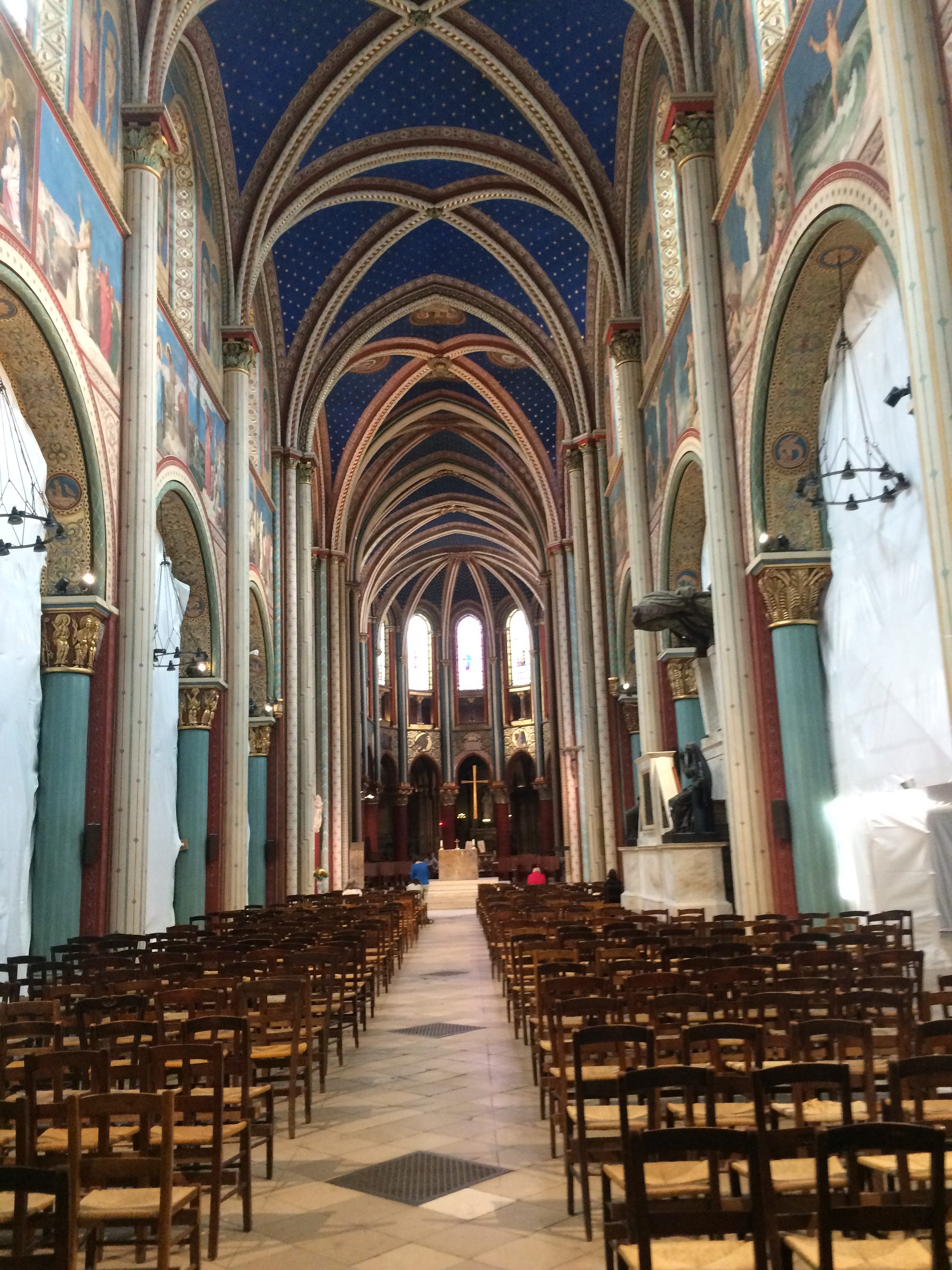
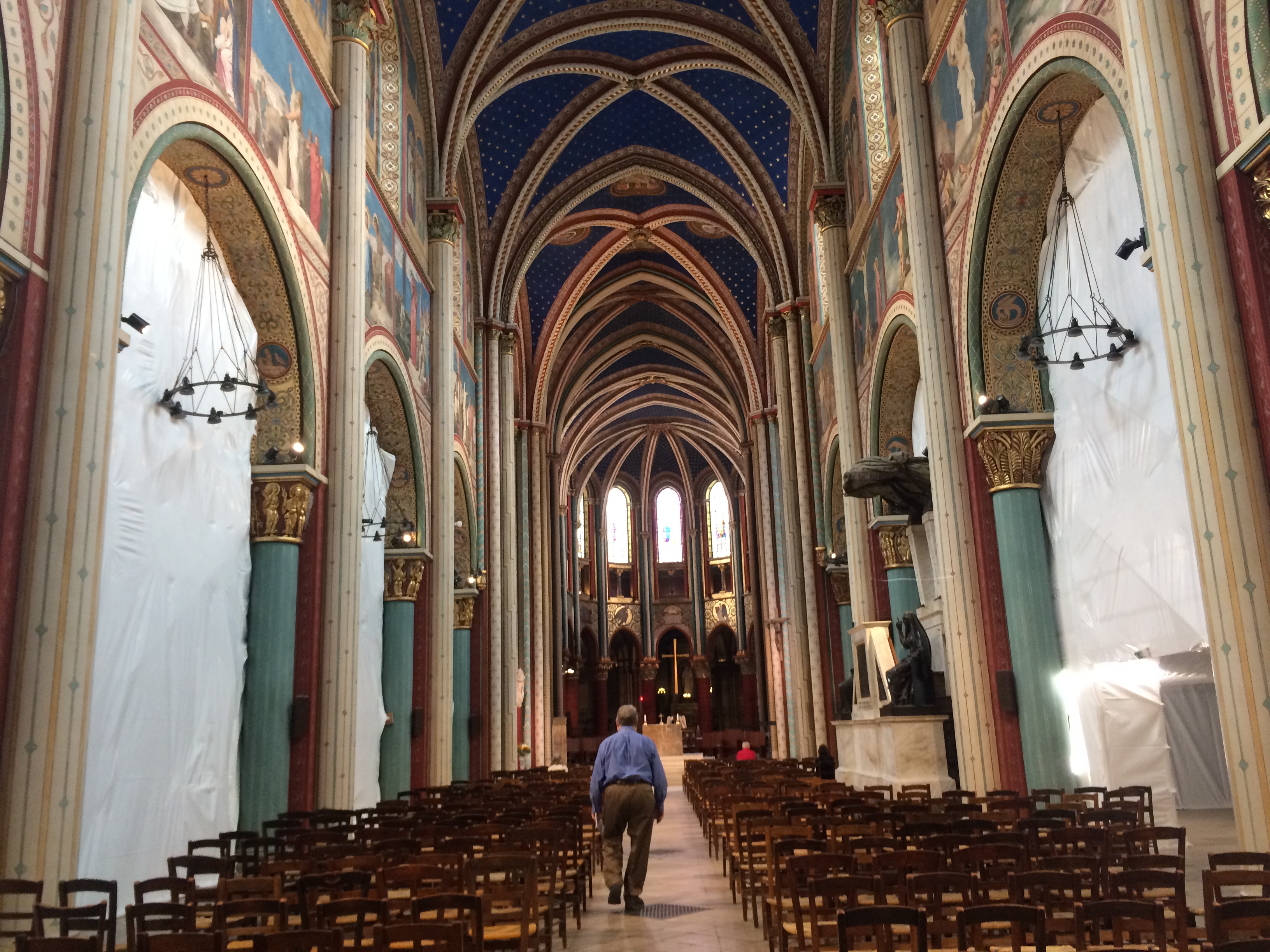

First of all, since I hadn’t been to this church before this Mass, here’s the history I normally give whenever I talk about a church for the first time:
According to its website, this church of Saint-Germain-des-Prés is a former Benedictine abbey of Paris, founded in 543 AD. It is one of or “the oldest churches in Paris.” The abbey was a royal abbey, which was dedicated April 23, 558 and featured marble columns, glass windows, and wood-paneled ceilings. The church was rebuilt in the 10th century in the Romanesque style (according to the restoration website), with the first four levels of the western bell tower, the nave, and the transept remaining from this period. The capitals on the columns are also 10th century. The choir was built in the primitive Gothic style in the mid-twelfth century and was consecrated on April 21, 1163. The church “is one of the first French Gothic buildings in the world.”
The other abbey buildings went through multiple renovations in the 13th century. However, during the French Revolution, abbeys were abolished. The abbey of Saint-Germain-des-Prés was abolished February 13, 1792. The church became a saltpeter factory until becoming a church again, a parish church now instead of an abbey, on April 29, 1803.
The church was restored, due to the impact of the Revolution, from 1821 and 1854. Currently, the church is going through another period of restoration. According to its website specifically about the restoration, restorations are occurring throughout the whole church, starting with the choir and lantern, then transept, nave, aisles, baptismal font, ambulatory, and finally axial chapel. The restorations started in 2016 and are supposed to be finished in 2020. It appears, from being in the church, that currently, the aisles are being worked on. It looks like they may be a little bit behind on their schedule. If you wish, you can go on the website and donate.
Now, on to the Mass:
First Impressions Of The Church:
The church itself is beautiful. It’s more Romanesque than the flamboyant Gothic Saint-Séverin, as it is older. The restoration of the church made it so I couldn’t get an unobstructed view of the nave, which isn’t what I normally want. It means that visitors, such as myself, can’t get the full view and full experience. However, I am glad the restoration is happening. It would be a shame to let the church fall into disrepair. I’m thankful the parish cares about the church and wants it well taken care of.
Length
This Mass was about an hour, like Saint-Séverin and the US parishes I’ve been to. Again, like I said last week, it’s because it follows the same Order of the Mass (same actions/events in the same sequence) so it would make sense for it to be the same length
Size
First of all, it was a bigger Mass than at Saint-Séverin. There were more people attending the Mass. I arrived rather early and ended up sitting closer than I might have otherwise, if I knew how full the Mass would be. Not all of the seats were filled, but a fair amount of people were in the nave and people were sitting in the transepts as well. There were also families there. At the Mass I went to at Saint-Séverin, there were families, but no small children. Here, there were small children, who did cry during Mass (which is a very common sound during Mass!). Where I was sitting up close, there were some other tourists (look for backpacks and confusion), but more people were speaking French and saying the chants and prayers in French, compared to Saint-Séverin. Again, though, I was sitting near the front, whereas other tourists may have been sitting farther back.
There were also three priests (or one priest and 2 deacons-I’m still not sure what vestments they were wearing) and an altar boy. This is larger than the lone priest and no altar boys at Saint-Séverin, though I did go to the smaller Mass at Saint-Séverin. In the US, it is typical to have altar boys at Masses, though normally we have 3 (and we have altar girls as well). At the churches I have gone to in the US, I don’t remember ever having 3 clergymen at one Mass, at least not a typical, Ordinary Mass.
Incense
Speaking of the altar boy, I noticed that he swung the incense both during the time when the presiding priest was reading the Gospel as well as during the consecration. I don’t remember this happening at my home parish-we don’t do much with incense.
Other People’s Behavior and Walking Around
Back to the other church-goers, there were some similarities to Saint-Séverin and my home parish, and some differences. People did show up late, but not as many, at least not as many showed up late and sat up front. Showing up late is common at American parishes too, to be fair.
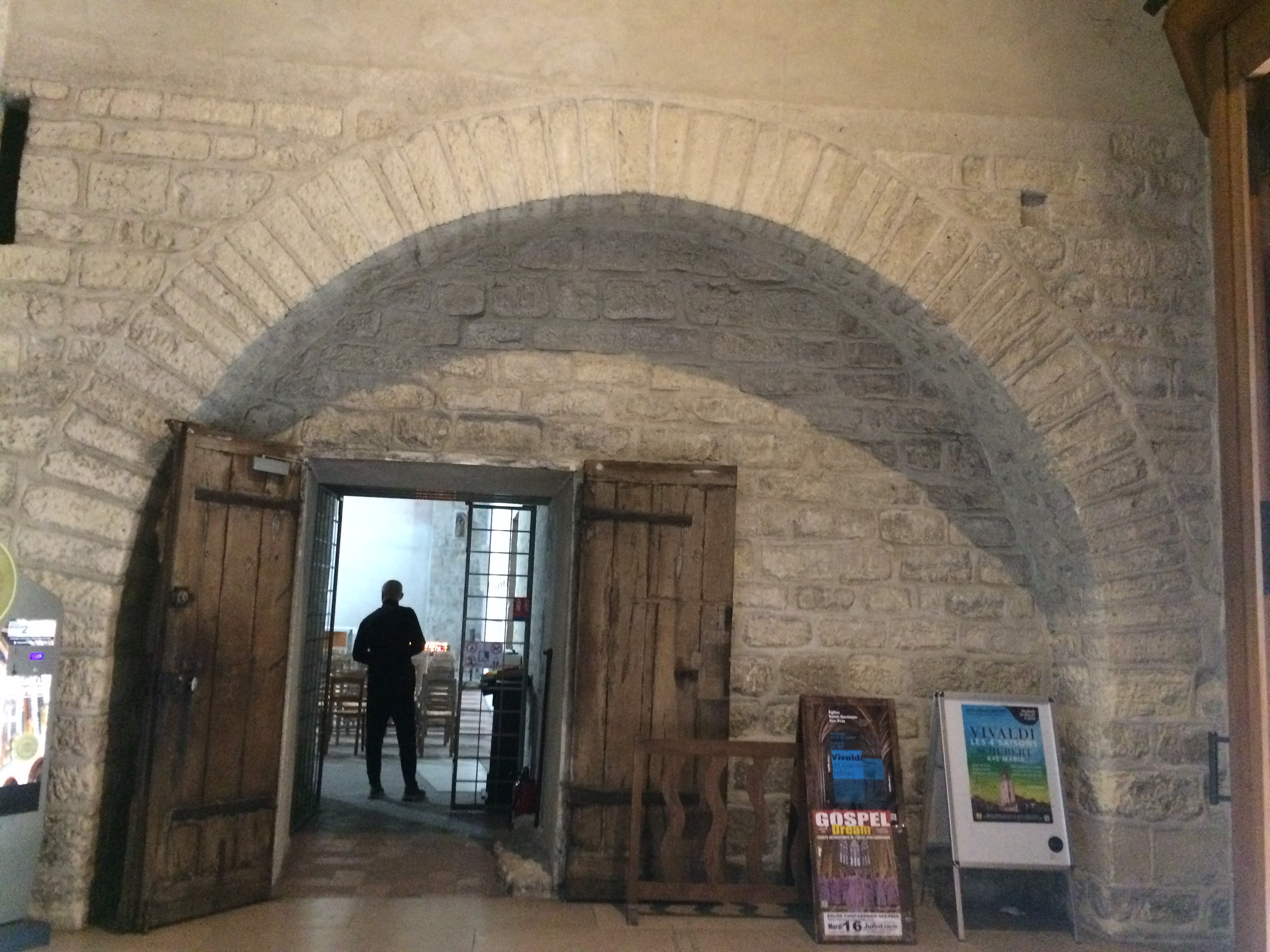
One reason may be because the ambulatory was blocked off with rope, to prevent people from walking around during Mass. The sides of the nave were already blocked off due to the restoration. This meant that people couldn’t walk around during Mass, which is nice, since at Saint-Séverin it was distracting, rude, and annoying. It also meant that people weren’t walking around during Mass and then sitting down, essentially being late for the Mass. People walking around during Mass must have been a problem at some point, or still is, considering they did block it off and put this sign up at the front of the church.

The only annoying or rude behavior I noticed was from one couple, who sat in the very front (4 pews back). Every so often the man would lean over and whisper in the woman’s ear for a while. Hearing whispering is annoying when you’re trying to pay attention to something that you don’t understand the language of! I think he was translating for the woman, just based off of when he would lean over, but maybe he was explaining what was going on, if she didn’t know the Order of the Mass. Though, if you do understand the language, it should make enough sense, at least not enough to warrant those long, whispering explanations! While I wouldn’t have minded understanding what the homily was about, I wouldn’t want someone whispering to me in the middle of Mass!
I wish that they would’ve sat in the back, though, if they were going to do that, out of courtesy to those around them. I found it rude that he would be whispering when the priest was talking!
Language
Speaking of language/translation, I can’t say that I understood much more than last week. Following along with the songs was just as hard, but for different reasons. The pamphlet last week was just for that Mass (I think), but I still had trouble. The pamphlet, or more booklet, at this church was for many weeks, and had numerous songs and psalms, enough for a table of contents. I was able to follow along with the first song, as I was able to catch what the woman said the name was, and I knew enough French to find it. However, as we went along, she either didn’t mention it or said it too quickly, so I wasn’t able to sing (or more follow along to) any others.
I was able to try and say some of the prayers, but it was hard to say the English out loud when everyone else was saying French around me!
As with last week, I knew what was going on with the Mass. I just didn’t know what the priest was saying in the homily. I meant to read the readings for this Sunday before going to Mass, but I didn’t take into account the fact that I am NOT a morning person and would not be awake enough to remember to read them before I left. Ah well, next week!
Choir
Speaking of singing, let’s talk about the choir, or lack thereof. Like last week at Saint-Séverin, there was only one vocalist leading the singing, no larger choir (although, at Saint-Séverin, the organist did sing too). At churches I’ve been to in the US, there are Masses with only one singer, but also Masses with a choir. I wonder if I somehow chose two Masses that don’t have a choir, since I clearly went to the smaller Mass at Saint-Séverin, but most French Masses do have choirs. I don’t know. Maybe French Masses don’t do choirs, or at least they don’t during vernacular Masses. This was the Sunday morning Mass at Saint-Germain, which I would have thought would have a choir!
Organ
Speaking of music, the organ at this church was beautiful too. One thing I didn’t mention last week was how, after the priest sat down after he finished his homily, the organ started to play. At this church, the same thing happened. I’m used to silence during this part, before we say start the Profession of Faith (the Nicene Creed). Sometimes in the US we even hop right into the Creed (Father Pat, the priest at my old parish of St. Mark in Vienna, Va was really good at leading his homily right into the Nicene Creed, tying his last statement to it, so there’s no gap between his finishing up of the homily and us saying the Creed). The fact that there’s music playing just confused me and made me wonder if something else was going to happen instead.
The organ went full throttle at the end of the Mass and it was amazing!
Singing
I do want to say something else about the music. Since there were more people there, including ones who speak French, there was more singing along to the songs. The organ was going full blast for the last song, and the choir woman (maybe she was the musical director) was singing, and so were much of the congregation. The song really filled up the church. It was beautiful and gave such a communal feeling.
Communion
Speaking of communal, Communion was different than at Saint-Séverin. More people got up for Communion and it was a more organized exiting out of the pews and lining up. There were also multiple lines, unlike from what I can remember at Saint-Séverin. There were multiple priests and there were also Extraordinary Ministers of Holy Communion (laypeople who also distributes Holy Communion). This isn’t completely unusual, as at St. Mark, which was a large church, that was also the case. At my new parish of Our Lady of Lourdes in Arlington, VA, it’s too small to do that. Since the Saint-Séverin Mass was also smaller, it made sense to have only one line or so.
The Communion wafer seemed the same as at Saint-Séverin, but again is different (thicker, less dissolve in your mouth) than in the US.
Kneeling
Kneeling was less uniform than at Saint-Séverin or back at home. At Saint-Séverin, very few people kneeled before and after Communion-most just stood. At parishes in the US, people always kneel (or sit, if they can’t kneel-like if they’re old). In the US, everyone does the same thing, and at Saint-Séverin, most people did the same thing. At Saint-Germain, most stood, but more people kneeled than at Saint-Séverin. I myself kneeled at one point, as that is what I am used to doing. Of course, I did sit in the front, so I didn’t see all of the congregation, but from what I saw, it was more mixed. I’m not sure why. I noticed more obvious tourists at Saint-Séverin, who you would think would be the ones most likely to not do what everyone else is doing.
Modern Sounds
While this church is very old, it is in a large capital city, and thus is surrounded by modern sounds that would not have existed when it was built. It is right next to the Saint-Germain-des-Prés metro station (which is really convenient) and I believe during Mass I could hear trains come in. I also heard 4 sirens (possibly ambulances) during Mass. Saint-Germain obviously has existed long before the modern street grew up around it, and now must experience and deal with things that those who built it and originally attended it could have never imagined.
After Mass
At the end of Mass, the priests and altar boy did process out. At some point during or right after the Mass, the rope blocking people from walking around the nave was removed, so people, including myself, starting walking around, admiring the chapels and praying. Here are some of the pictures I took:


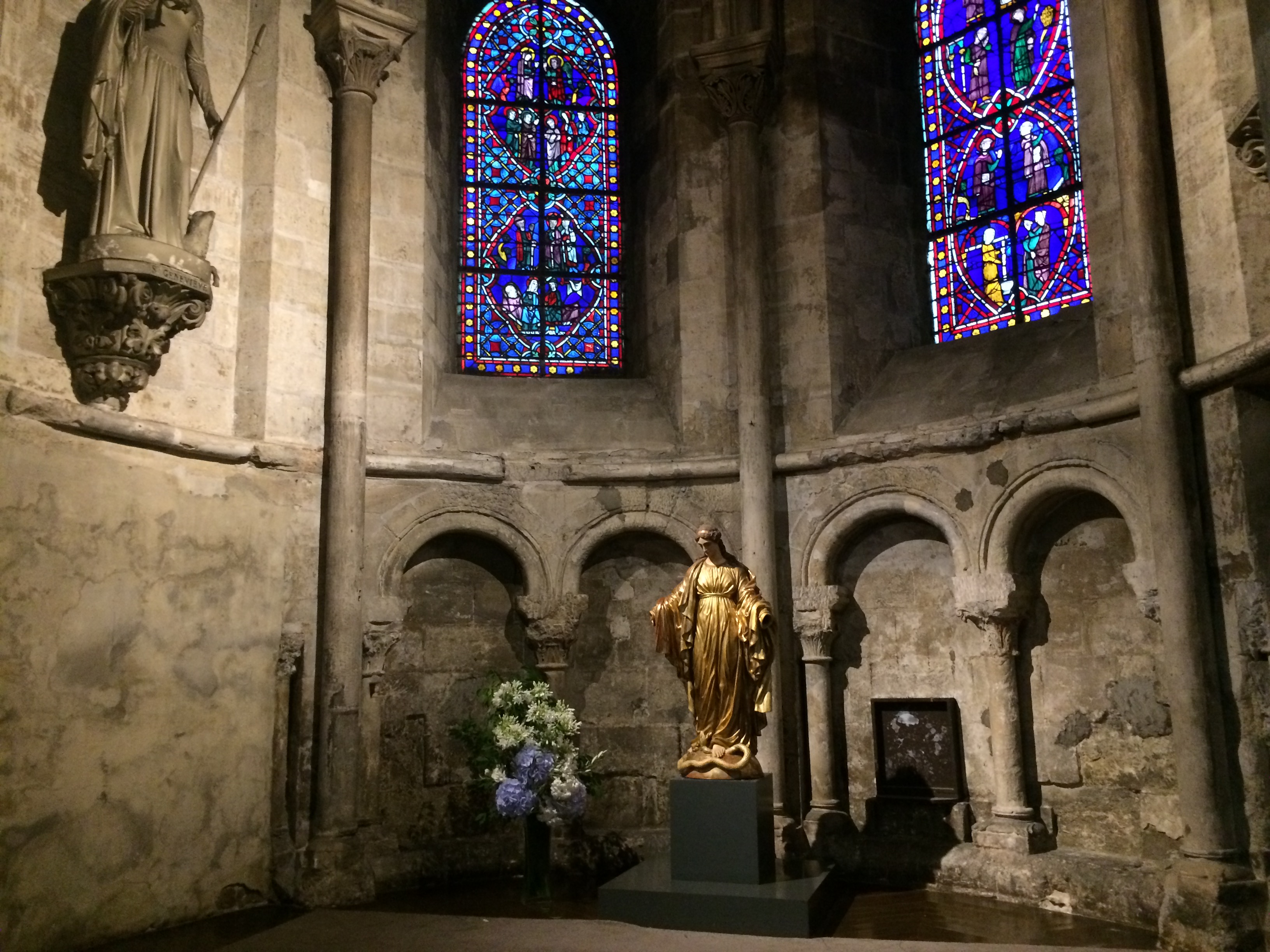

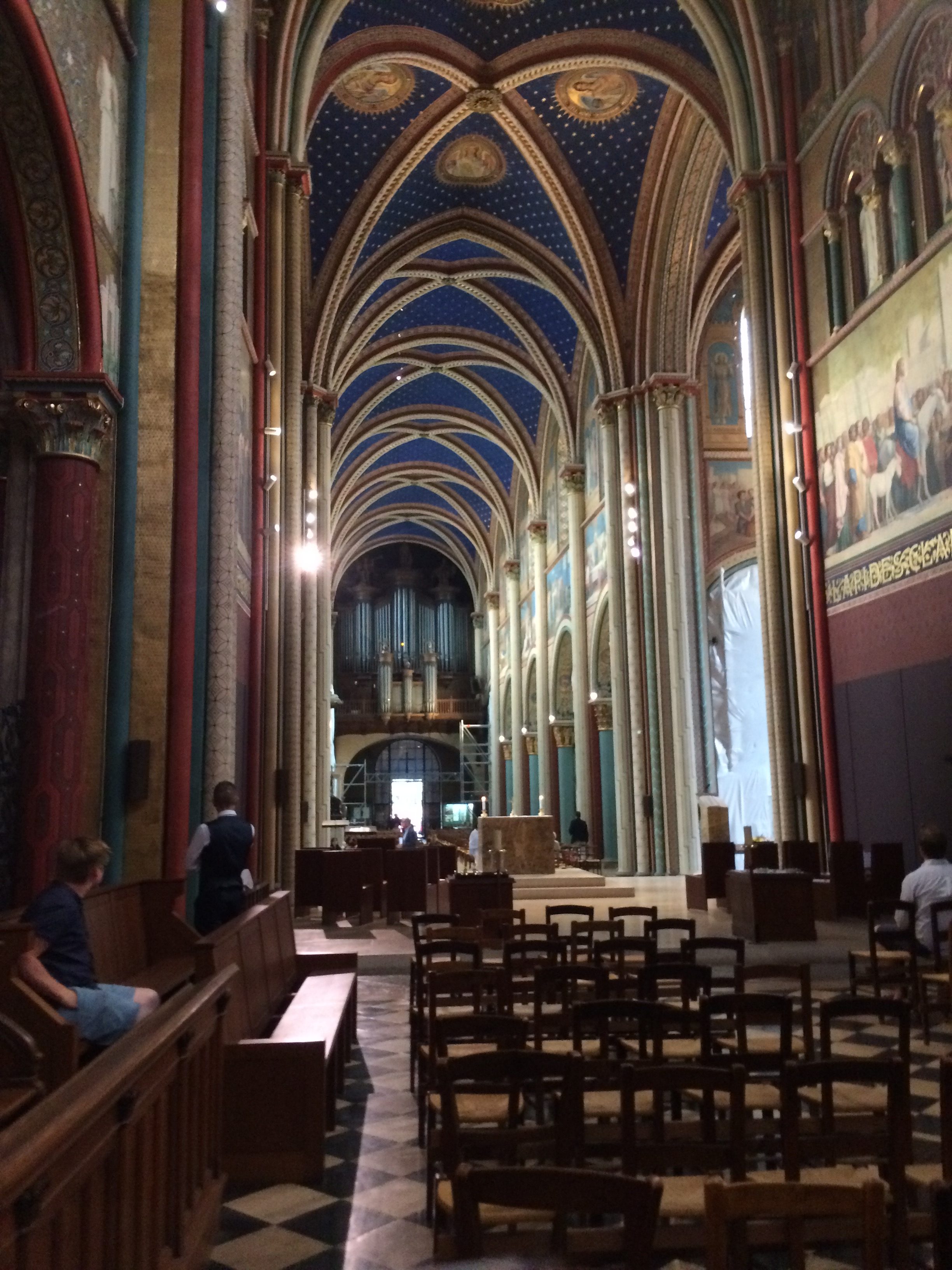
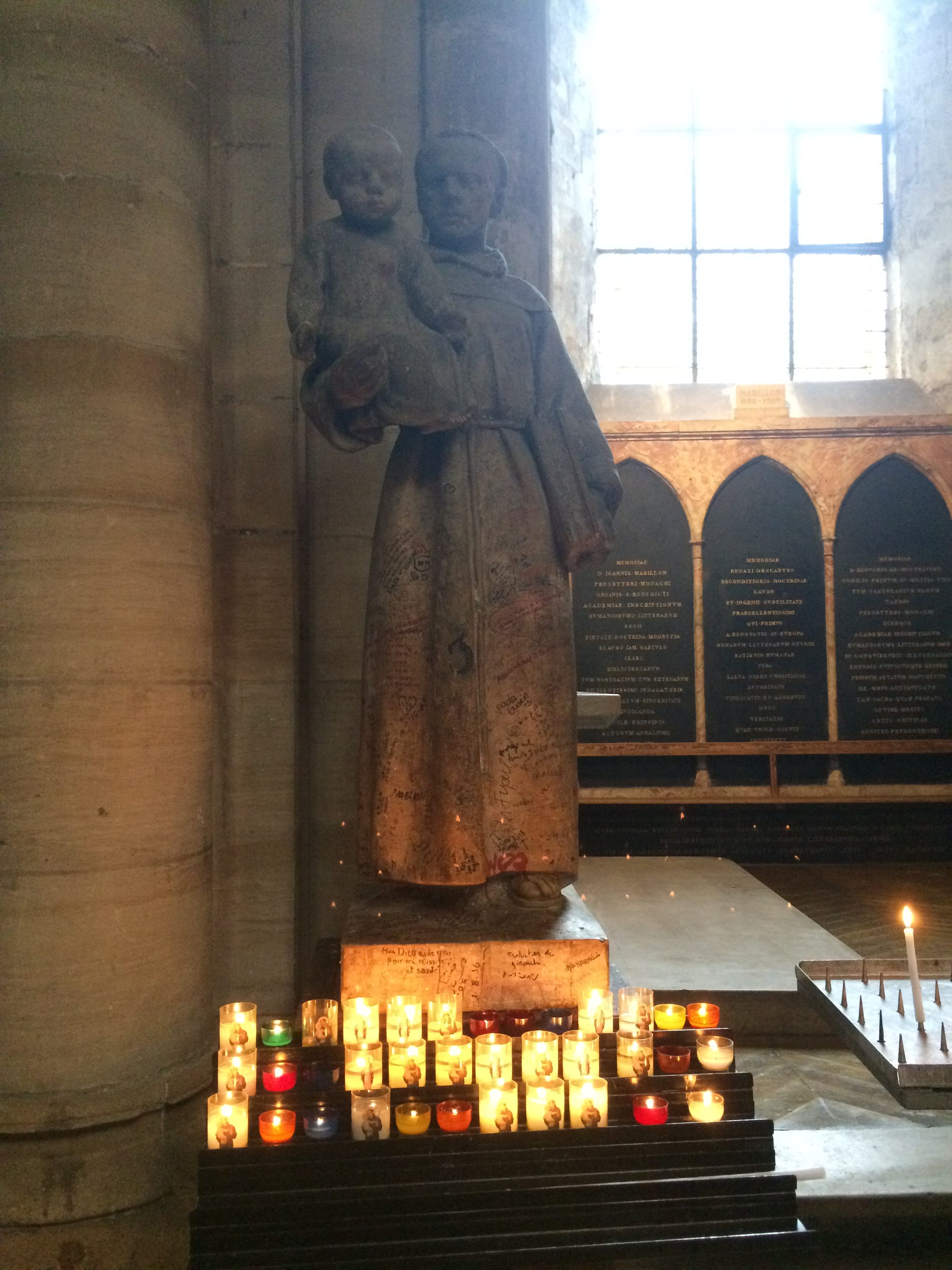
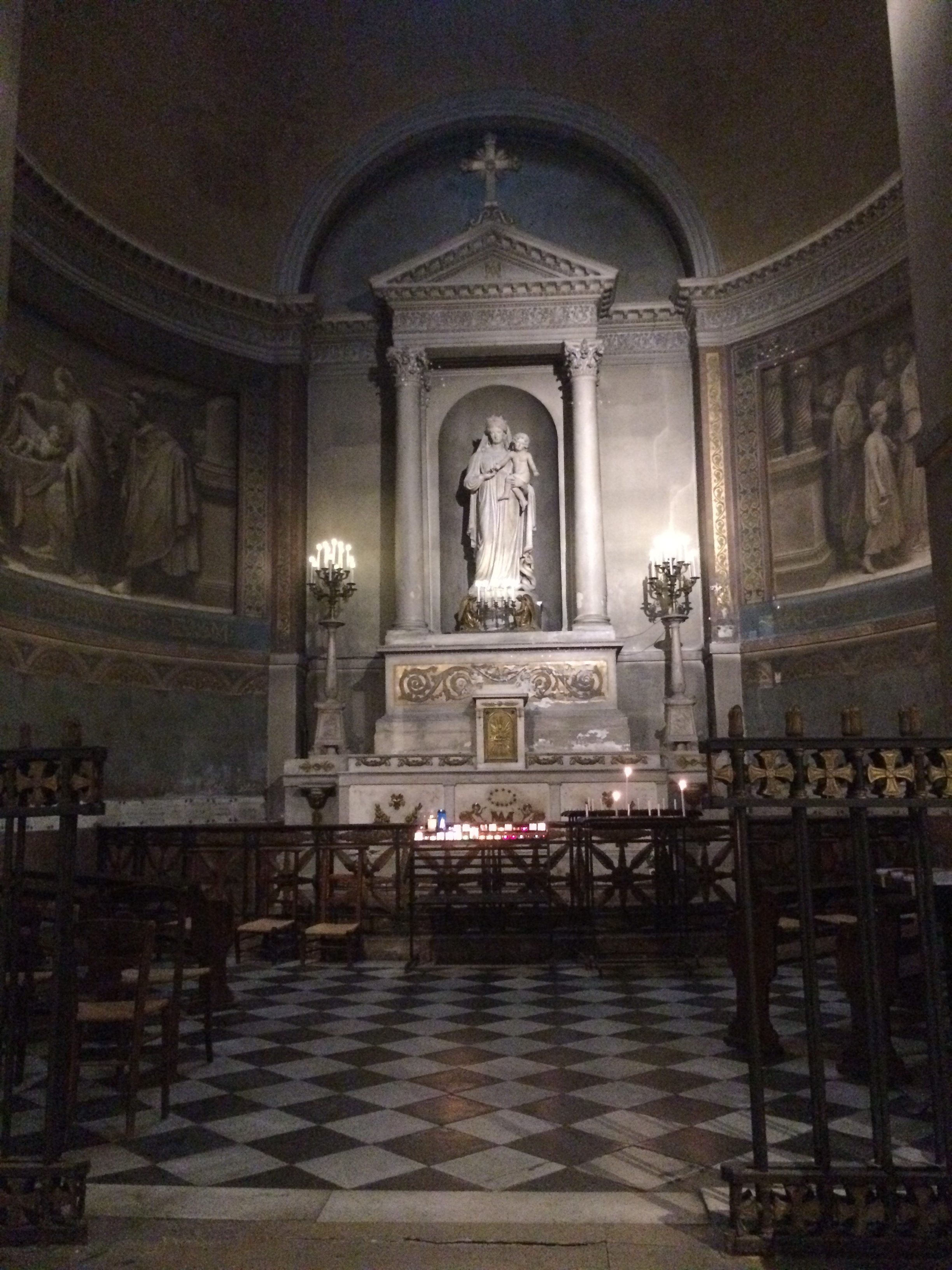


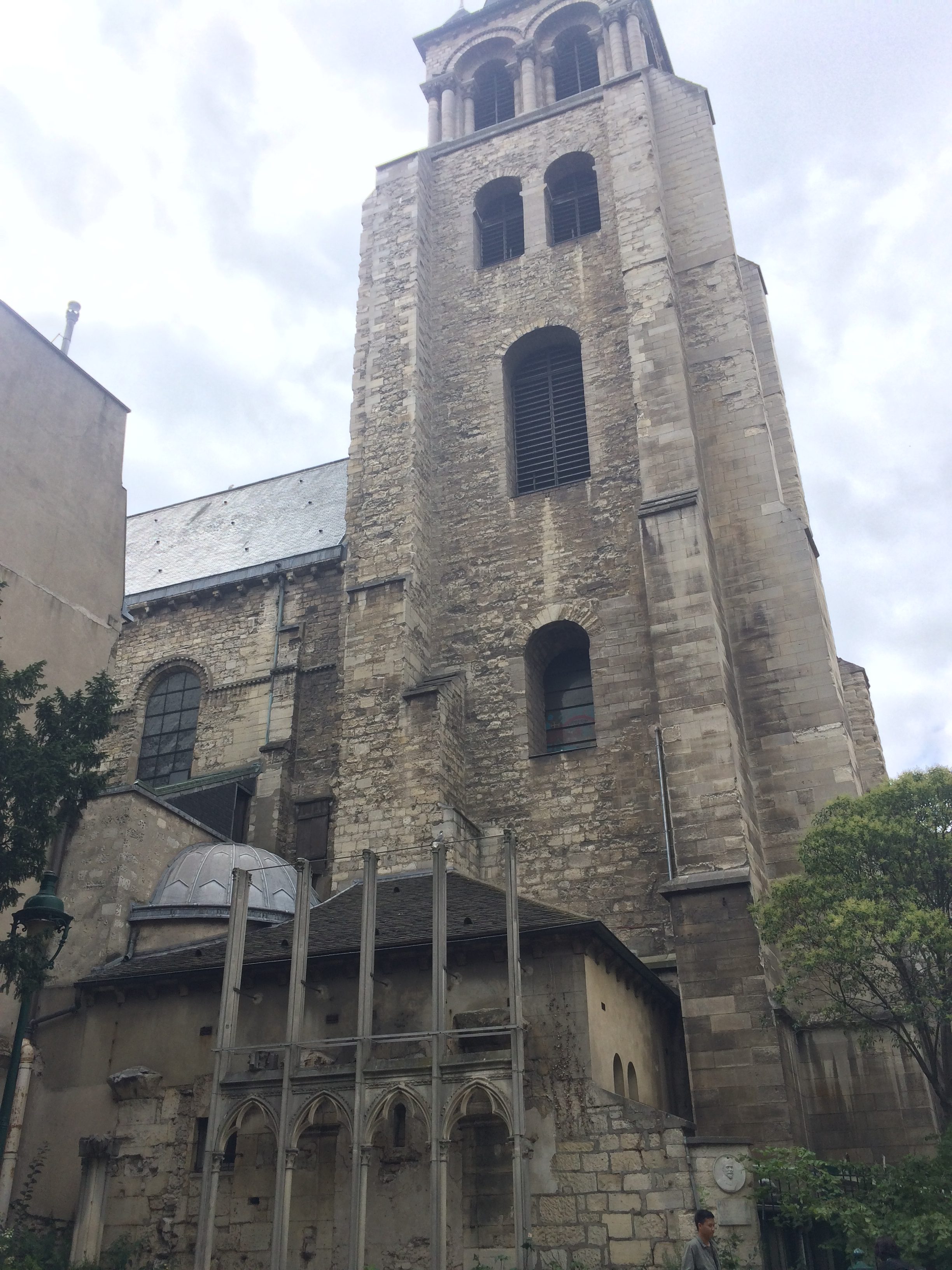


I noticed Saint Rita of Cascia (3rd row from the bottom, middle) and Saint Anthony of Padua (I think that’s an Anthony of Padua statue in the 4th row from the bottom, middle picture) were here too. Neither of these saints were French (both lived and died in Italy, though Saint Anthony was born in Portugal), so I wonder why devotion to these two seems to be common here in Paris. Saint Anthony is the patron saint of lost things, which would explain why he is common throughout the world, but I still don’t remember seeing him much back home. I didn’t know who Saint Rita was until last year, when I moved to Arlington and went to St. Rita Catholic Church in Alexandria, VA. She’s the patron saint of lost and impossible causes and abuse victims. Unfortunately, spousal abuse occurs worldwide, but I can’t think of anything tying her patronages or life to Paris in particular.
Overall Thoughts
Another beautiful Mass in a beautiful church. I would like to come back someday when the renovations are complete and get the full view of the church. It’s interesting to see that some things were similar to Saint-Séverin, such as the organ and Communion wafer, while other things, like having an altar boy and Extraordinary Ministers of Holy Communion, are more similar to parishes back home. Next week, I’ll again go to a different parish, and then see how it compares to these past two!
For more churches, chocolate, and cheese, check back in soon!
Bibliography
Prés, Église Saint Germain des. n.d. L’ÉGLISE. Accessed July 15, 2019. https://www.eglise-saintgermaindespres.fr/l_eglise/.
Saint-Germain-des-Prés, Fonds de dotation pour le rayonnement de l’église. n.d. A story written over 1,500 years. Accessed July 15, 2019. https://www.depuis543.org/#histoirehover.
—. n.d. La restauration de l’église un projet ambitieux…. Accessed 15 2019, July. https://www.depuis543.org/.
About The Author

