The End Of The Week Started Off Slow..
The end of this week started off slow…until we went to Strasbourg!
Churches
July 17th
On Wednesday, we just passed by a couple of churches on the way to pick up the Brittany cider bowls that we had seen before-the Church of the Val-de-Grâce and the Église Saint-Jacques-du-Haut-Pas. You can read about them in this blog post, when we first saw them. I actually need to go back to Saint-Jacques for my project.


July 18th
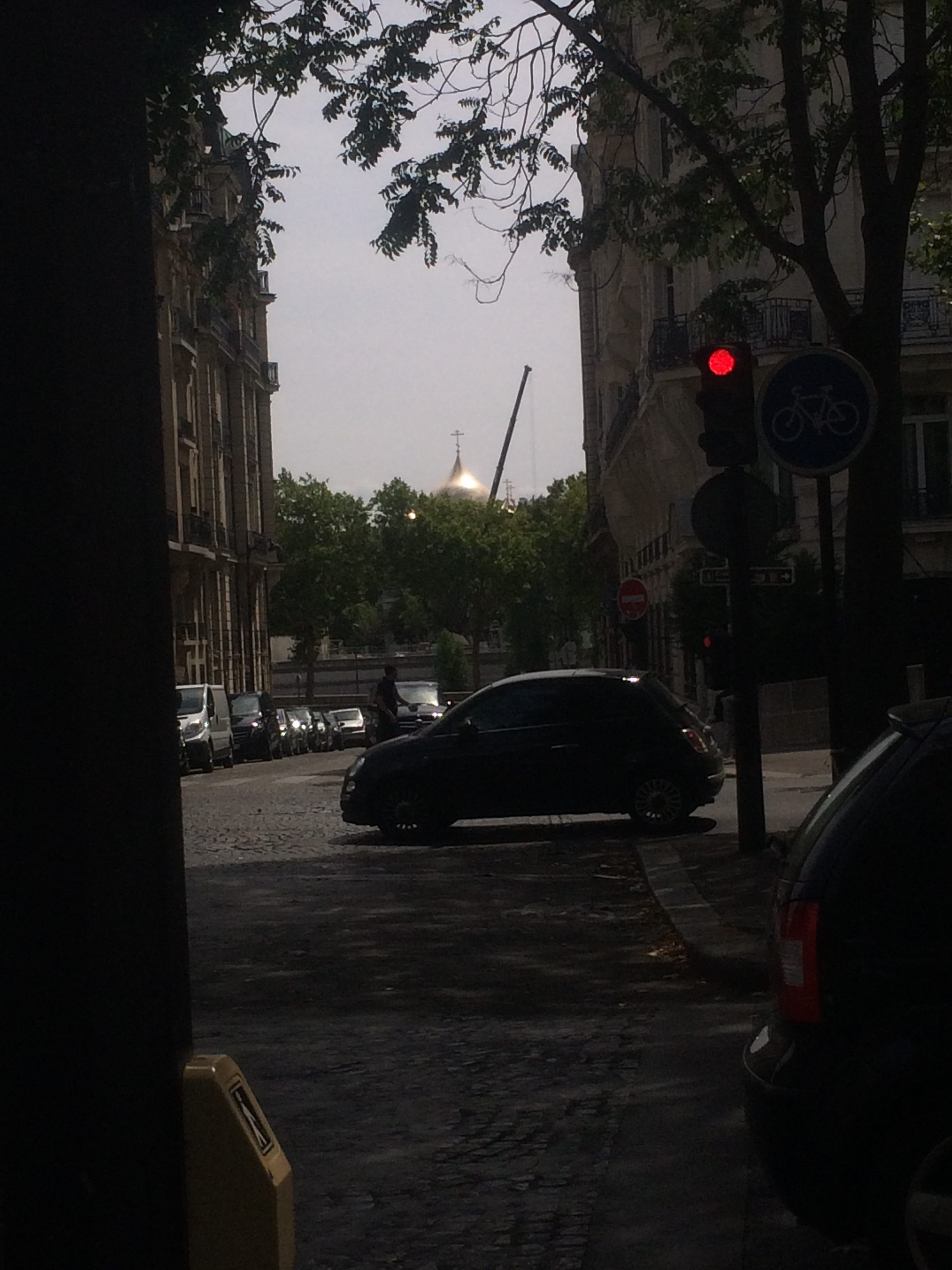
While we were walking back to the RER, I saw in the distance golden pointed domes with crosses at the top. It looked very Eastern Orthodox to me. Yep! Upon investigation, that is the Holy Trinity Cathedral and the Russian Orthodox Spiritual and Cultural Center. According to Wikipedia, as I couldn’t find the history on the website, it is a complex of 4 buildings-the Cultural Center, an educational complex, an administrative building, and the Holy Trinity Cathedral. The styles are Art Moderne and New Classical. The opening was on March 19, 2016, with Anne Hidalgo, Mayor of Paris, Vladimir Medinsky, Russia’s Minister of Culture, and representatives from the Russian Orthodox Church in attendance. It was visited by at least 12,000 people during September 2017’s Days of the French National Heritage, making it one of the most visited places.

July 19th
So, on Friday, we went to Strasbourg.
There were so many cute little French towns with their churches that we passed by. However, I am not going to try and find them, considering 1-I couldn’t take pictures of any of them, 2-I couldn’t use data to figure out what towns I was passing by, and 3-I’m not a masochist. Maybe one day I’ll be able to figure out what towns they were and what the churches were. Today is not that day!
Ah, what to say about Strasbourg! It is so lovely. If I spoke French and/or German and I could somehow find a job, Strasbourg would be such a nice place to live. I absolutely want to go back someday.
We saw several churches there:
The first church we passed by was Old Saint Peter’s Church, Strasbourg. According to Wikipedia (I can’t find anything on the website), this is a shared church-both Catholic and Lutheran. I don’t think I have ever encountered a shared church before! This church was first mentioned in 1130. During the Middla Ages, the Diocese of Strasbourg had 9 churches-this was one of them. On May 22, 1398, Chapter of the Abbey of Honau moved from Rhinau to this church due to flooding, staying there until 1529, when the church became Lutheran, and then returning in 1683, due to the return of Catholicism to the church, finally leaving again in 1790.
As mentioned above, the church became Lutheran during the Protestant Reformation, suspending Masses at the church starting February 20, 1529. Then, in 1683, King Louis XIV, who had annexed Strasbourg in 1681, ordered that part of Old Saint Peter’s Church be made Catholic again. The church was divided by a rood screen to separate the religions (Protestants had to stay in the nave). The division would stay this way until 2012, when a door was put into this dividing wall. In the 19th century, the Catholic part was extended opened in 1867, with its 18th century pipe organ moved to the Church of Saint Maurice in Soultz-les-Bains in 1865.
Both parts of the church have works of art classified as Monuments historiques, with the Catholics also having relics of Saint Brigit of Kildare .
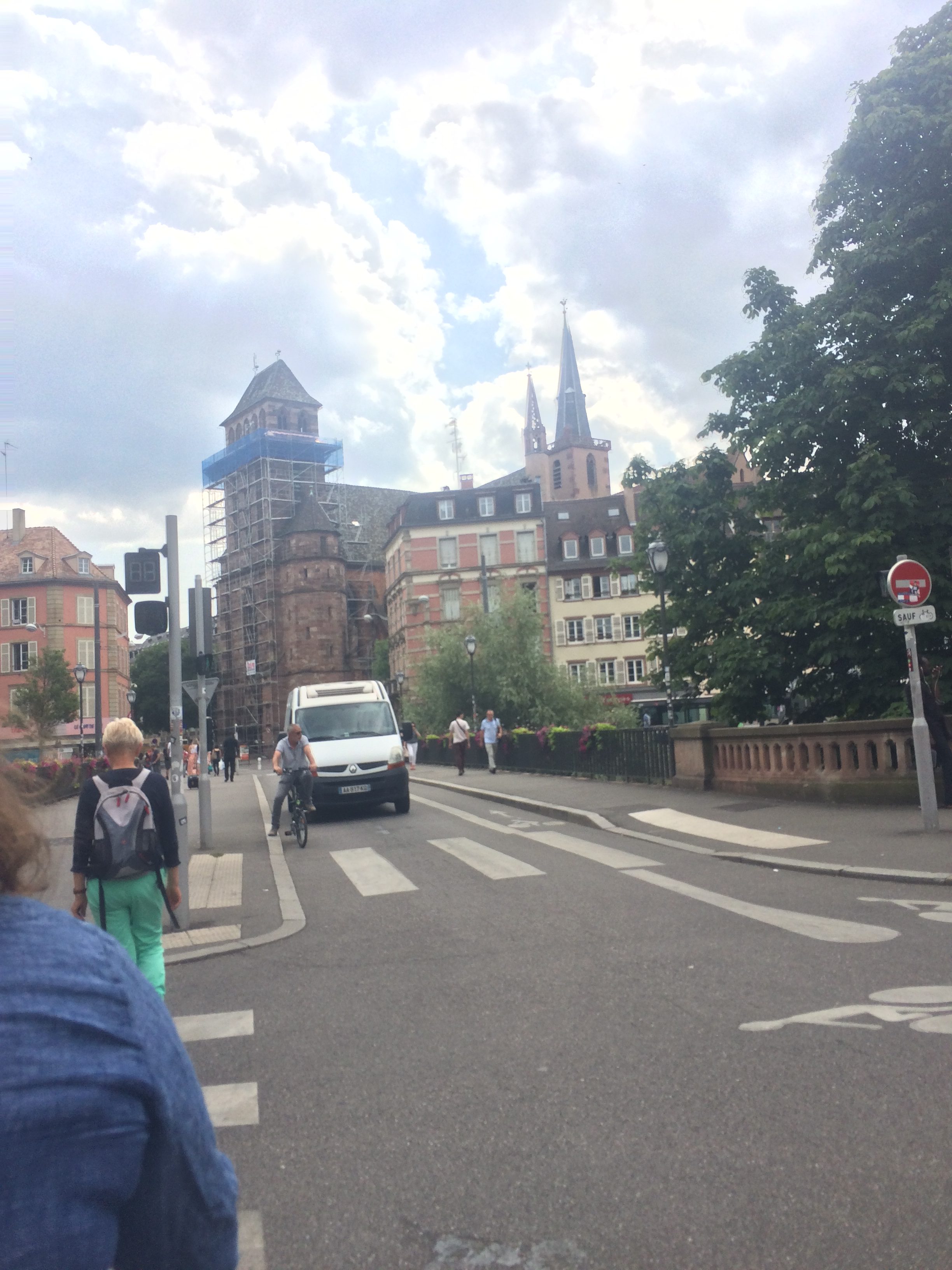

Then, we saw Strasbourg Cathedral (Cathedral Notre-Dame de Strasbourg). Wow! That is one magnificent building.
According to its website, there was an original cathedral that was destroyed in 1002 during a war. A new cathedral was built in 1015, but was eventually completely reconstructed due to several fires. After one such fire in 1176, the cathedral was rebuilt. Parts of the building (crypt, the northern cross, the choir, part of the southern cross, and the chapel of Saint Andrew) are built in the Romanesque style. Due to the Gothic style arriving in in Ile-de-France, the Pillar of Angels is built in the Gothic style in 1225. More construction commenced, such as the construction of the Saint John Chapel, the nave, and the rood screen. The nave was finished in 1275, in the “radiant Gothic style.” In 1349, the chapel Sainte-Catherine was consecrated. Then, in 1390, the belfry was completed. In the 15th century, the baptismal font was put in. In addition, the arrow was completed in 1459 and the pulpit for Jean Geiler and the entire Mount of Olives were constructed in the same century.
Then, in the 16th century, in 1521 to be specific, the Protestant Reformation came to Strasbourg. The language of the Cathedral was changed to German in 1524 and then the church became Protestant. In the same century, the chapel of Saint-Laurent was consecrated and the astronomical clock was built. After Strasbourg was annexed by France in 1681, the Cathedral became Catholic again. Its layout then became Baroque, the preference of the time period.
However, during the French Revolution, it became a temple of reason, though the looting of the Cathedral was thankfully limited. After the Revolution, it became Catholic again. It was restored in the 19th century and became a “historical monument.” However, the roof was also bombed and caught on fire in the 19th century. In 2004, the choir was restructured to fit the liturgical renovation of the Vatican Council II. It is still undergoing restorations.

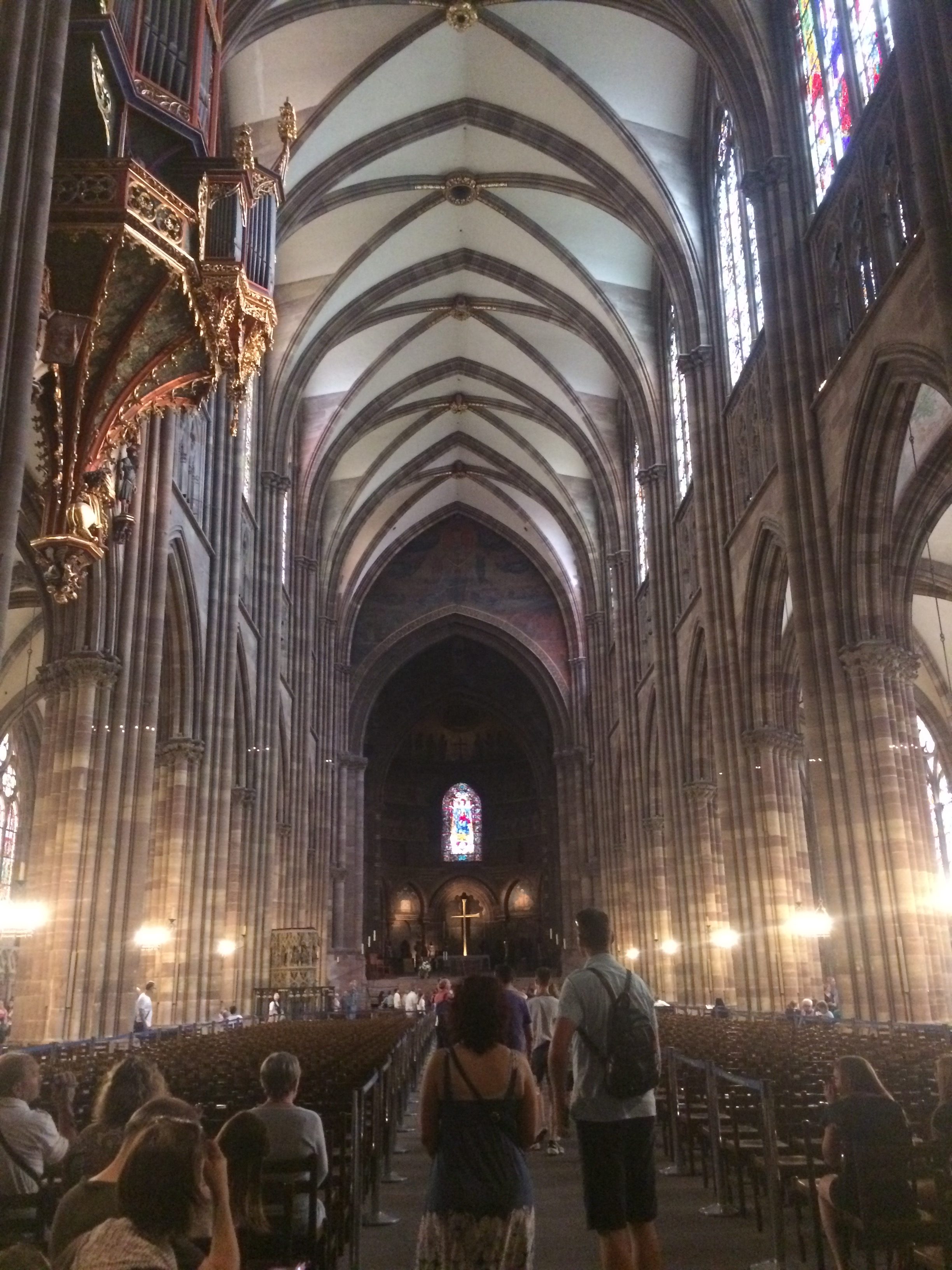


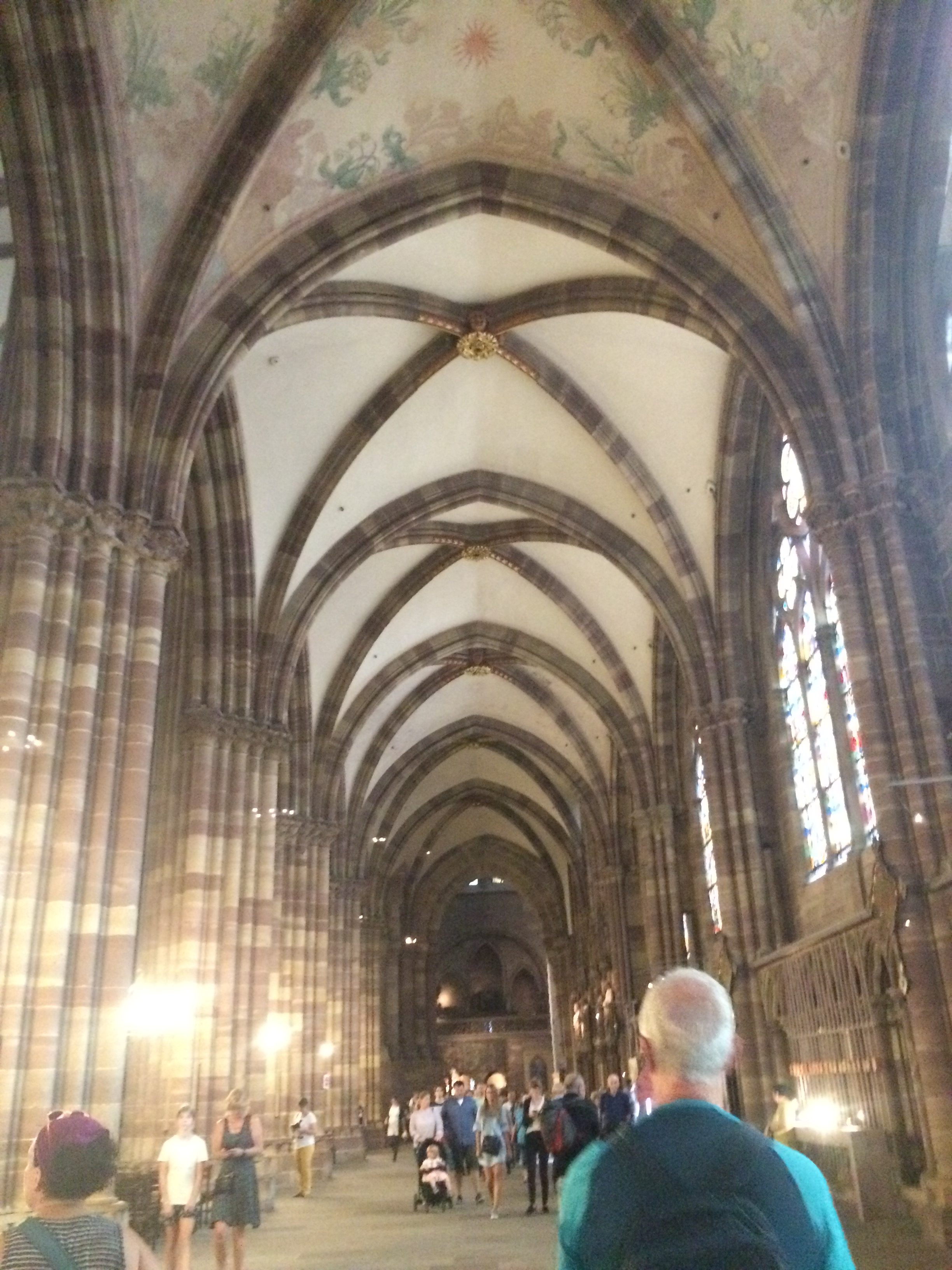


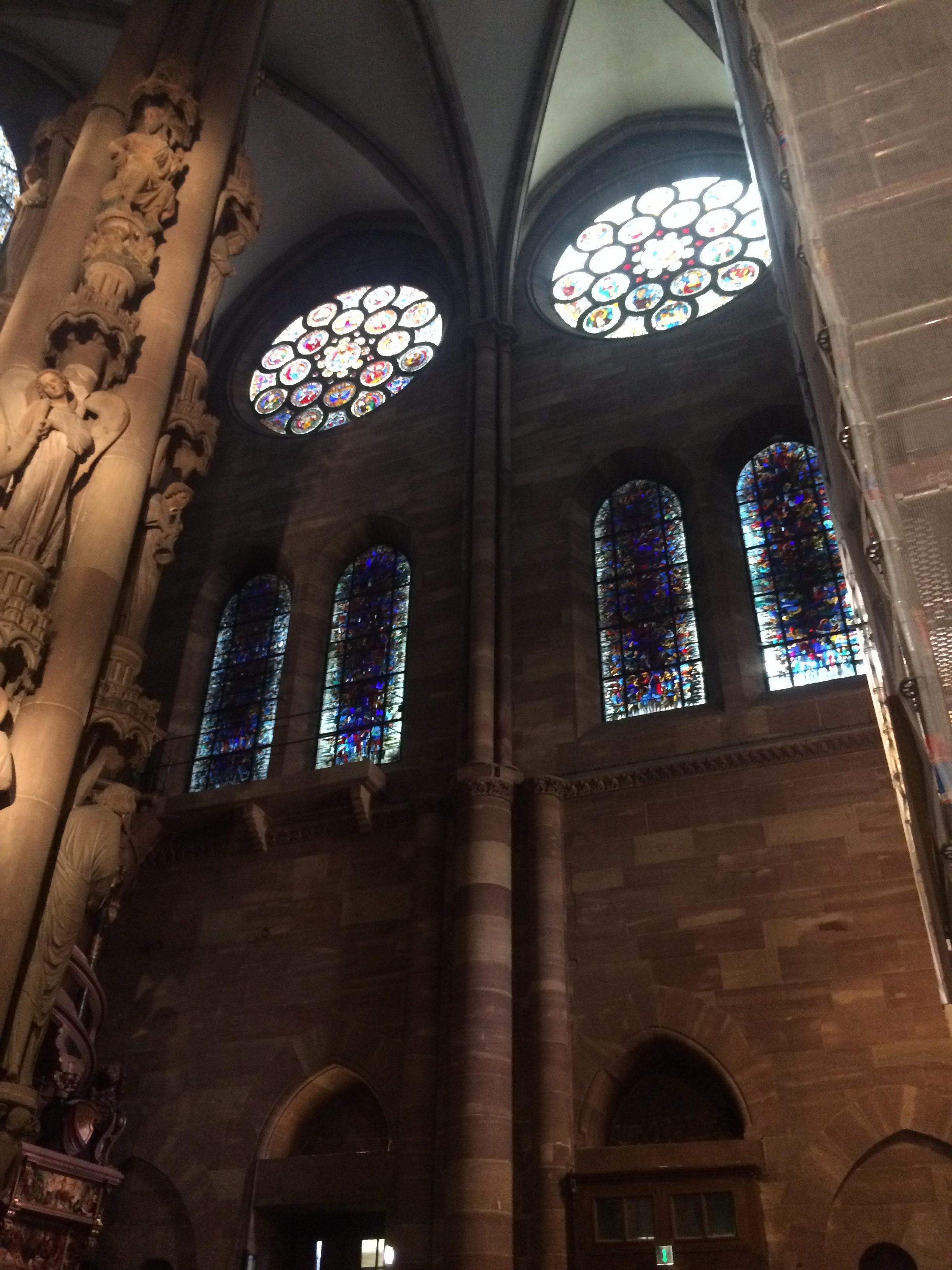
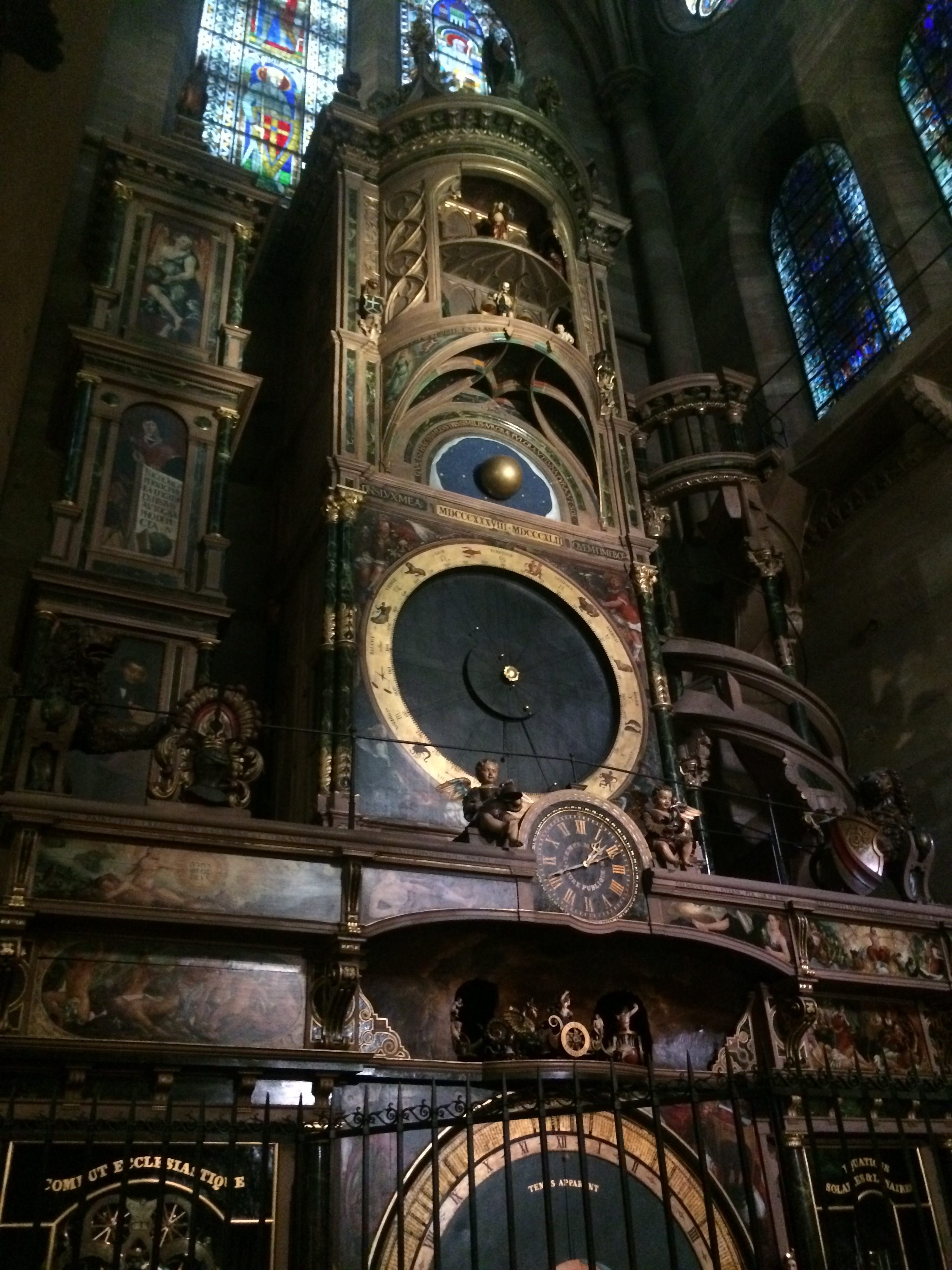


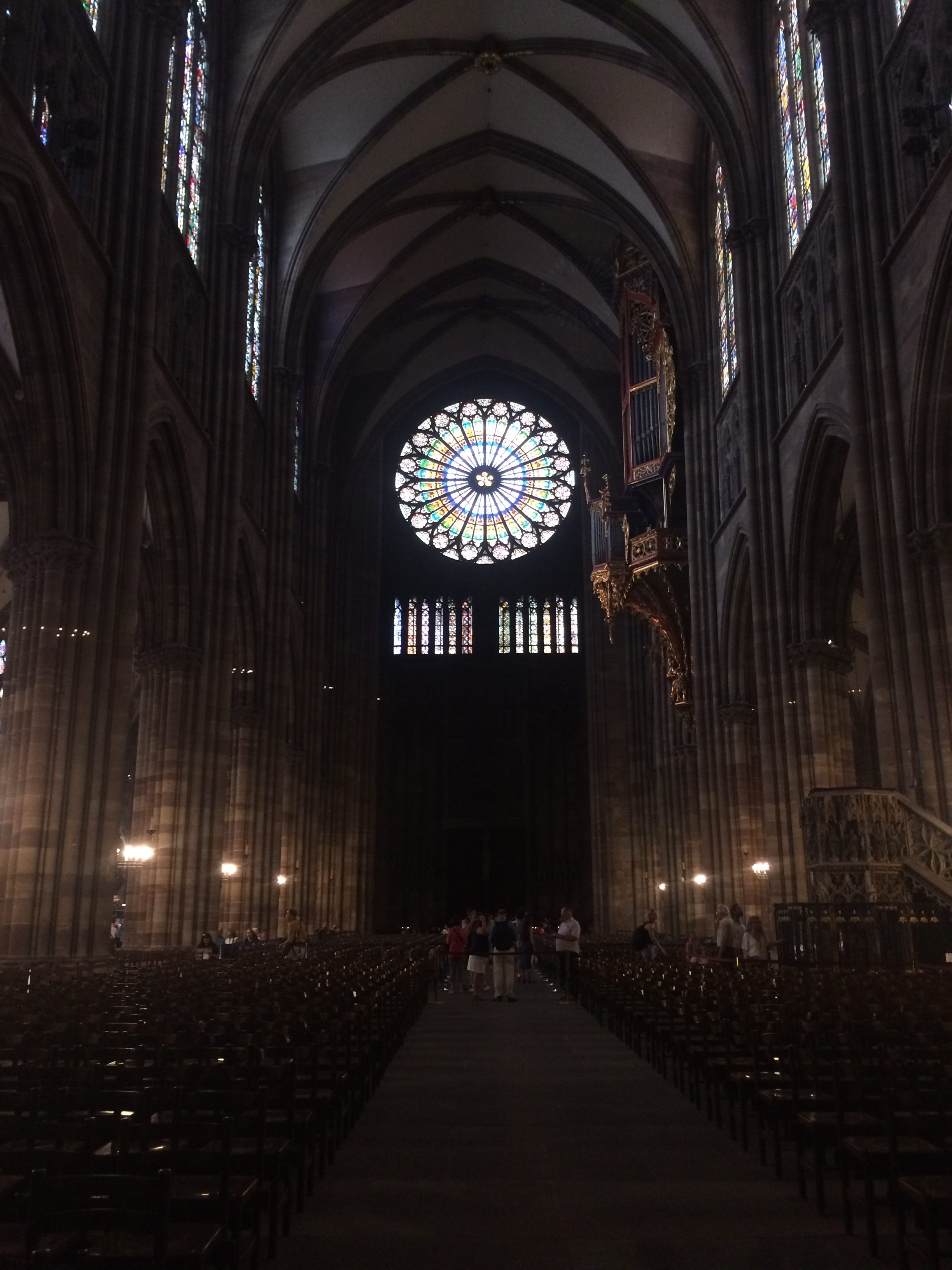
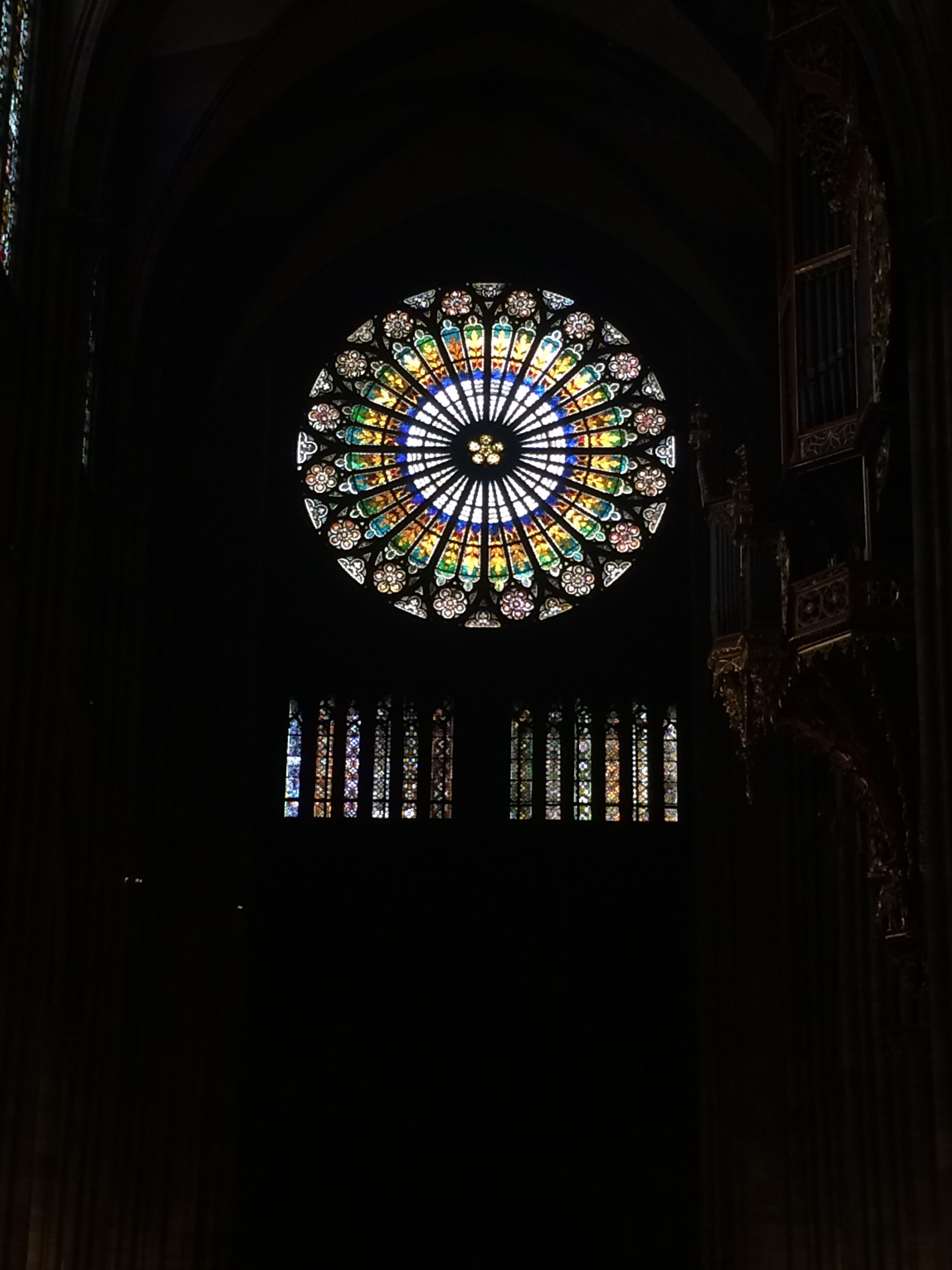
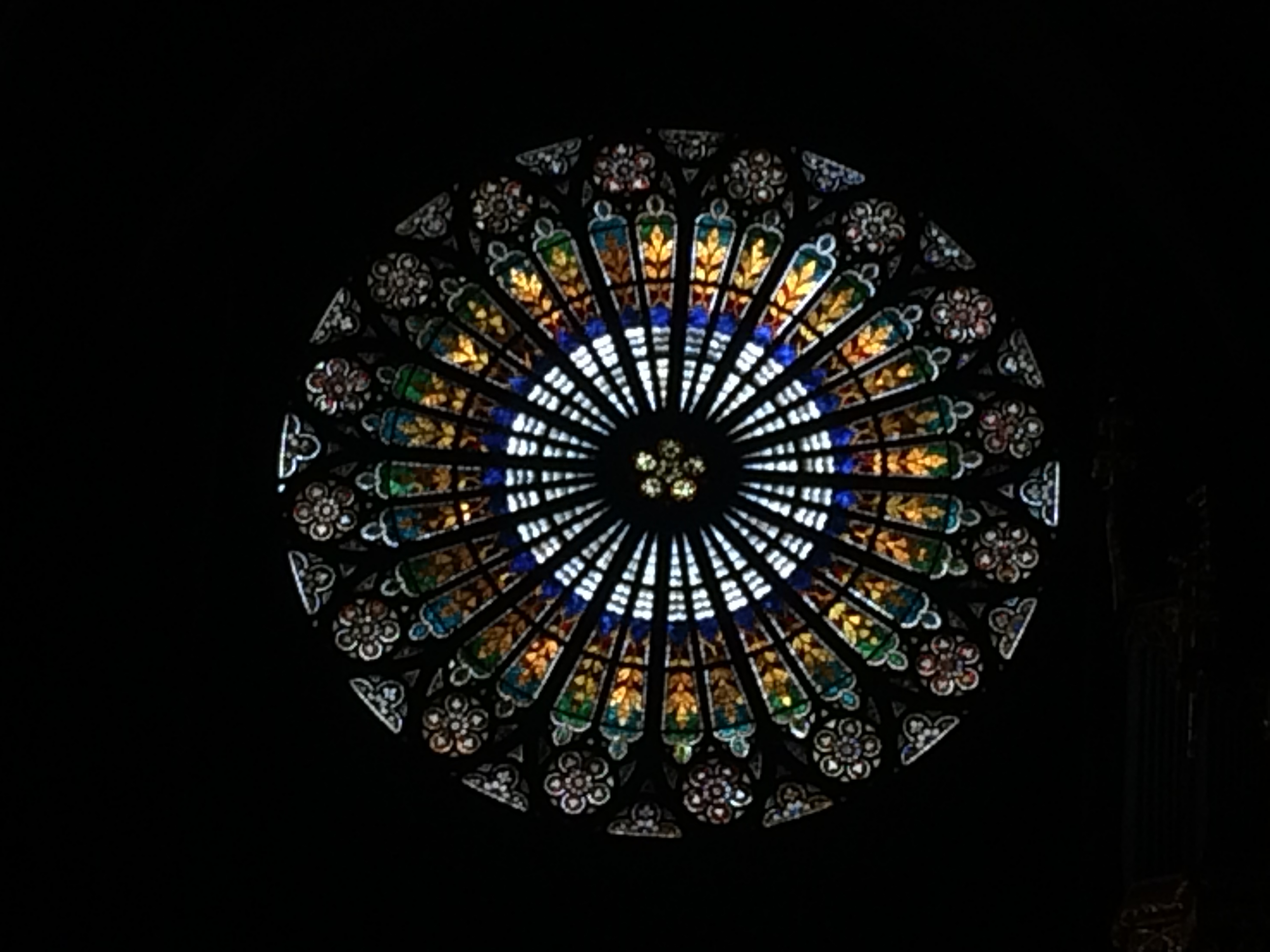
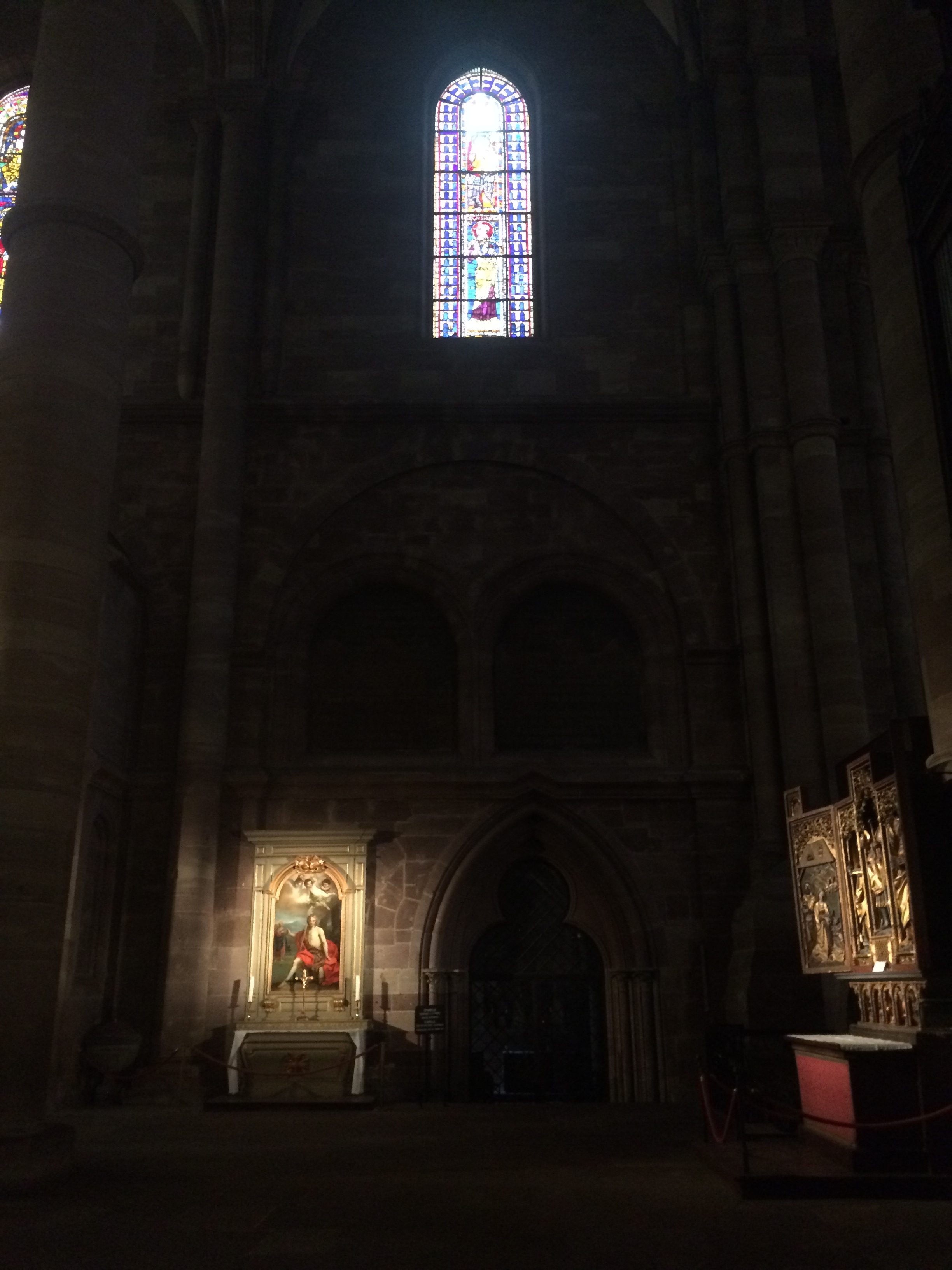
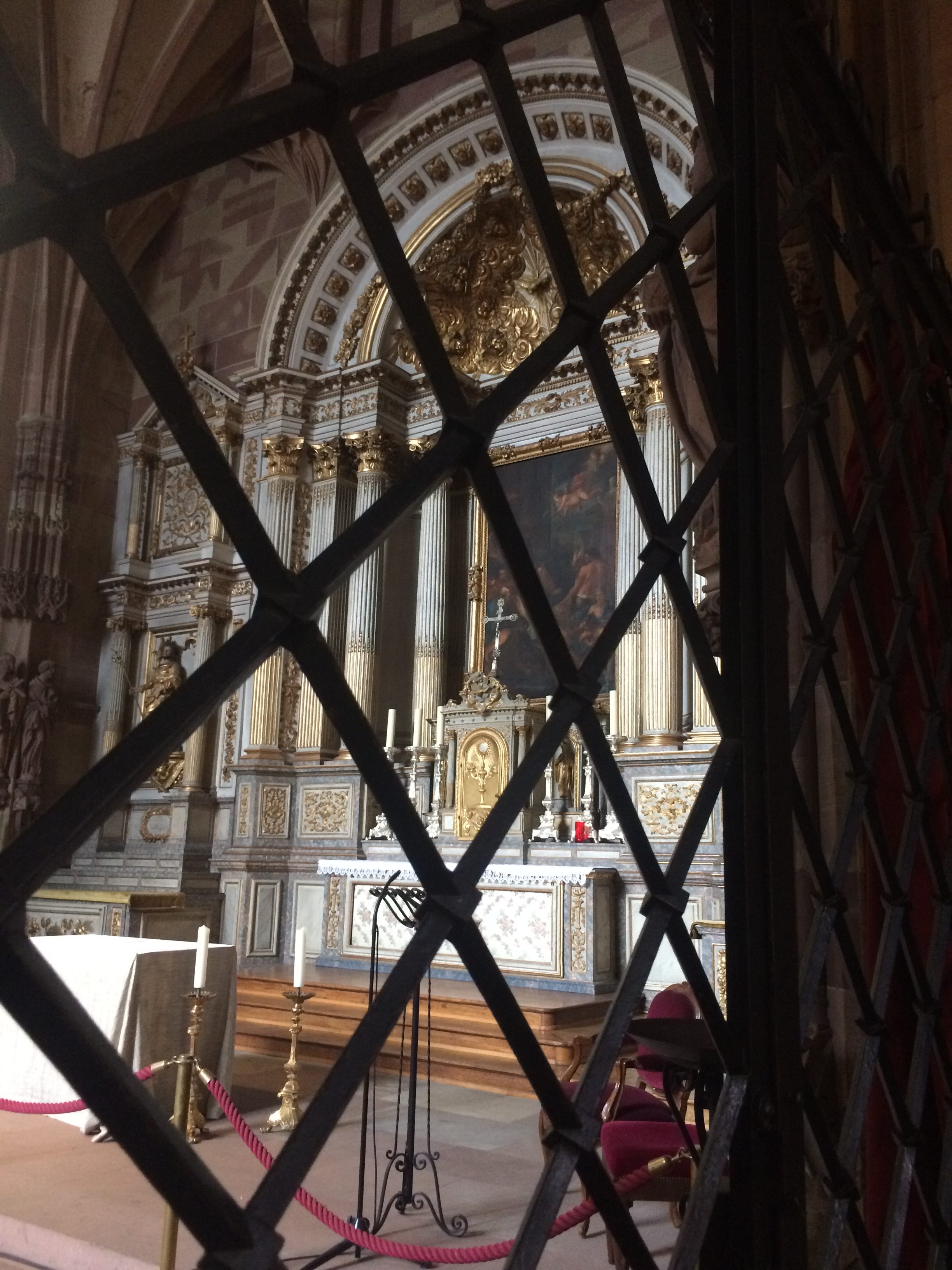
One thing I noticed was that this church didn’t have the side chapels that other Gothic churches have had, such as Saint-Séverin and Saint-Eustache. I wonder why that is.
It’s interesting how both these churches were affected by the Protestant Reformation. Both of them became Protestant, and one of them is still partly Protestant. It was only due to the French king that Catholicism survives in these churches. So far, the only church that has, when I have done research for this blog, talked about the Protestant Reformation and been impacted in any way was the Temple du Marais, as that is now Protestant. However, it only became Protestant in 1801, after the Reformation, and the only way it connects to the Reformation is that the religion it practices comes from the Reformation. I wonder if the physical distance between Paris and Germany has something to do with it, as the Reformation started in Germany (I believe) and Strasbourg is very close to Germany. Perhaps it also has something to do with the power of the French monarchy, which would have had a large presence in Paris, the capital of France, but not Strasbourg, which wasn’t even part of France at the time.
Chocolate
July 17th
At the bakery we went to after getting the cider bowls, I got a pain au chocolat. Despite it being like 3 in the afternoon, the pain au chocolate was still soft and flaky. The chocolate was also nice and rich. It wasn’t quite as good as the one that I had before entering the Père Lachaise Cemetery, but it was still pretty good. I would say it takes second place so far.

July 18th
Emily, Matt, and I went to La Petite Hostellerie for dinner, all of us ordering off of the 10 euro menu (appetizer, main course, and dessert for all for 10 euro). The appetizer is in the cheese section below. Emily and I had actually been to the restaurant before-all the way back on July 7th. I had gotten the chocolate mousse then, and I decided to get it again, as I just wanted chocolate. Like before, it wasn’t the best mousse. The flavor is not bad, though it’s not super rich, but the texture leaves something to be desired (not super smooth).

July 19th
At the bakery we went to in Strasbourg, I got the “cake tout chocolat” (all chocolate cake). After all, I am a chocoholic! It was very good. It was rich without being overpowering or too sweet. The only flaw was that the layers would separate, so it was hard to enjoy both types of the layers at once. However, it did give me a chance to evaluate both layers separately. The cake layer was not too dry. The darker, more fudgy layer was the best part-it was the richest part. I would happily order this again!

Cheese
July 17th
At the Café du rendez-vous (where we met Dr. Smith to talk about our projects), I got the cheese ravioli. I’m not sure what type of cheese was in them, but the ravioli was quite good. It was very rich and filling. Also, look at how tiny they are!!!


July 18th
At the bagel place we went to for lunch, I got the “Paris” bagel-cream cheese, chèvre, nuts, arugula , and mirabelle plum jam. I had to google what the last two ingredients were-I don’t speak French well and I have never had mirabelle plums and didn’t know they existed/what “mirabelle” was. This was a pretty good “bagel” (the bread is clearly not a bagel). I love chèvre and cream cheese, and thankfully the chèvre flavor really came through. I liked the other ingredients too, though for me, cheese it always the best ingredient. The nuts did add a nice crunch, the argula made it feel healthier (I need more vegetables in my life), and the jam added some sweetness.

So, at La Petite Hostellerie for dinner, for the appetizer I got the quiche lorraine. It was actually pretty good! It was nice and airy but still had nice flavor. I’m not sure what cheese was in it. I was surprised by how good it was, considering that the tourist restaurants in the Latin Quarter are pretty hit-or-miss.

July 19th
I got a quiche from the bakery we went to in the station (quiche 2 days in a row!). Unfortunately, it seems like I accidentally deleted the photo (probably to make room for Cathedral pictures). It was pretty good, and a nice size for a mid-morning breakfast; However, it wasn’t as good as the quiche from the restaurant, which was lighter and more flavorful.
The only other cheese I had that day was goat cheese at lunch. Jessica didn’t like the goat cheese on her salad, then Daria tried it and didn’t like it, so I tried it. It’s not as good as the typical chèvre I’ve had, but it wasn’t as bad as the other two made it out to be. It did have a more bumpy texture (probably due to the rind) which wasn’t great. I’ve never seen goat cheese with the rind like that-it looks more like blue cheese! (however, I am not well-versed in goat cheese). I’d still eat it though, if it was on my plate (I was too busy trying to tackle my large portion of meatballs, potatoes, and salad to even attempt to eat this too!)

The chevre I have at home and the chevre I’ve had in Paris has been very similar. Yet, this goat cheese is very different. I wonder if the difference is because it’s a different type of goat cheese from a different place that I’ve never had cheese from before. Whenever we get chevre in the US, it’s just called chevre (or goat cheese) not a specific type of cheese. Perhaps that is why it took me (and the others) by surprise.
Last week, I said that it would be hard to beat those few days of churches. While these few days didn’t have as many churches, I would say that Strasbourg Cathedral does give Saint-Eustache a run for its money!
For more churches, chocolate, and cheese, check back in soon!
Bibliography
2019. Holy Trinity Cathedral and the Russian Orthodox Spiritual and Cultural Center. May 12. Accessed July 20, 2019.https://en.wikipedia.org/wiki/Holy_Trinity_Cathedral_and_the_Russian_Orthodox_Spiritual_and_Cultural_Center.
La Paroisse de la Cathédrale de Strasbourg. n.d. Historique de la cathédrale. Diatem. Accessed July 20, 2019. http://www.cathedrale-strasbourg.fr/historique-de-la-cathedrale.
2019. Old Saint Peter’s Church, Strasbourg. May 6. Accessed July 20, 2019. https://en.wikipedia.org/wiki/Old_Saint_Peter%27s_Church,_Strasbourg.
About The Author

