A Churchy and Cheesy First Two Days in Paris
Three of the things I was excited to experience in Paris, and three of my favorite in general, are churches, chocolate, and cheese. Over the course of this trip, I’ll be posting blog posts of these things and anything interesting about them!
I landed Monday morning (July 1st) in France. That day, we did the boat tour then had dinner. Tuesday was the first full day in Paris, where we saw Saint-Chapelle, the Concierge, and had free time before the picnic with MICEFA. Here’s the churches, chocolate, and cheese from those two days!
(P.S. the article isn’t as long as it seems-I just put in a lot of pictures! The pictures have to be full size to get the best quality, which shows off the details)
Churches
July 1st
The first sighting of Parisian churches came when we were running to catch the boat tour before it left. As we were walking, I saw the Notre-Dame de Paris, the most famous of all the churches in Paris, and one of the most famous in the world. There wasn’t time to take a picture or get closer.
However, in the boat tour, we passed by it, and I got a few pictures.


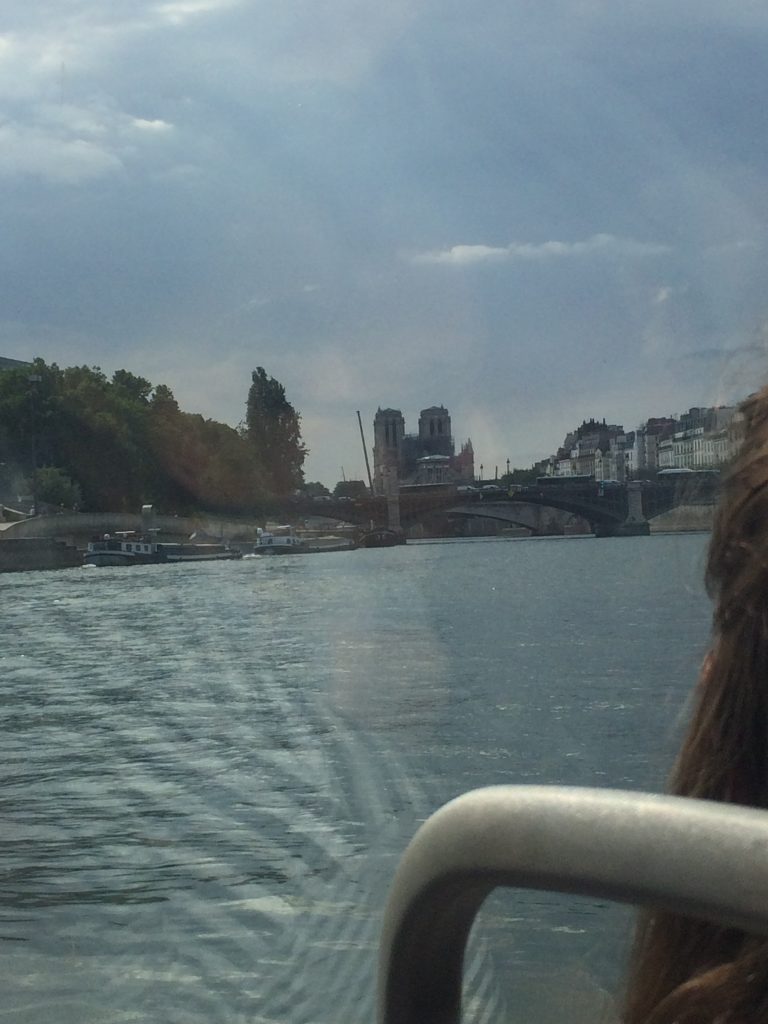
The Notre-Dame is/was one of the places I was most excited to visit. The header picture for this blog even was a picture of it, before I changed it after the fire (it seemed wrong to use a picture of it when its damaged and unable to be visited). Seeing the church just makes me sad now. One day, I hope to go to a Mass there once its restored.
July 2nd
On July 2nd, we saw the Notre-Dame again, this time getting closer to it and even walking around to see different sides. Oh, how I wish to be able to go inside or even just hear the bells!
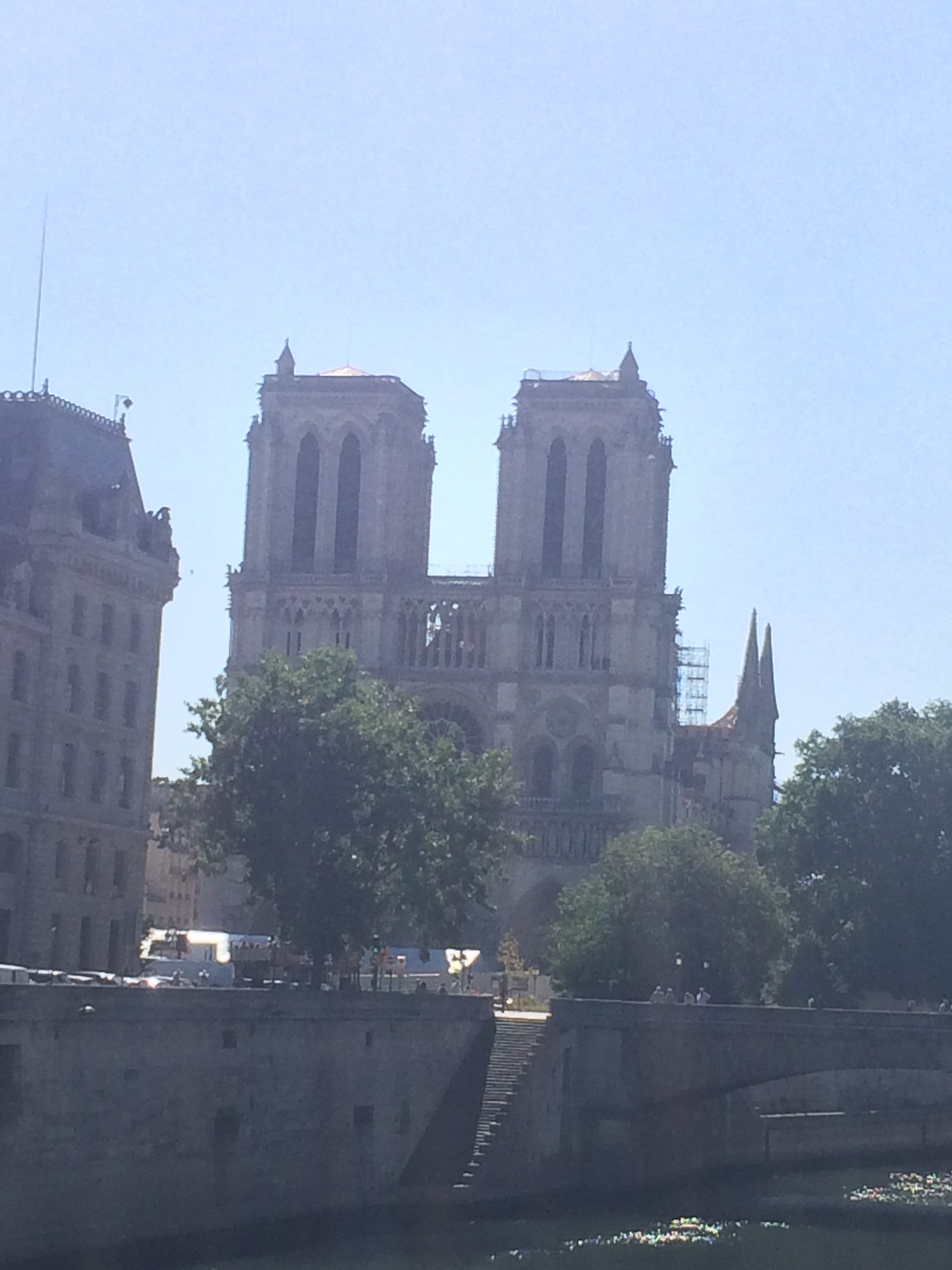
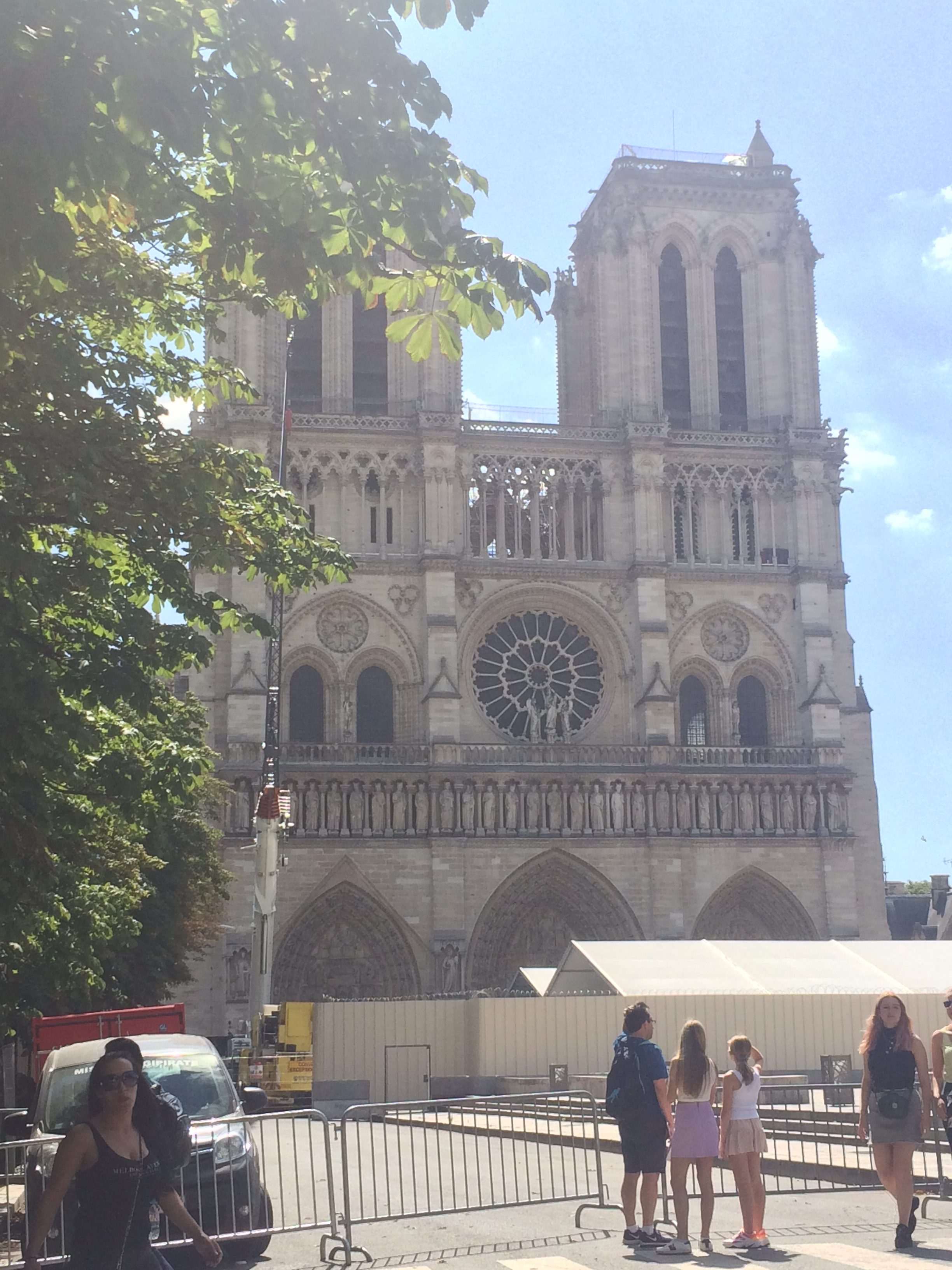

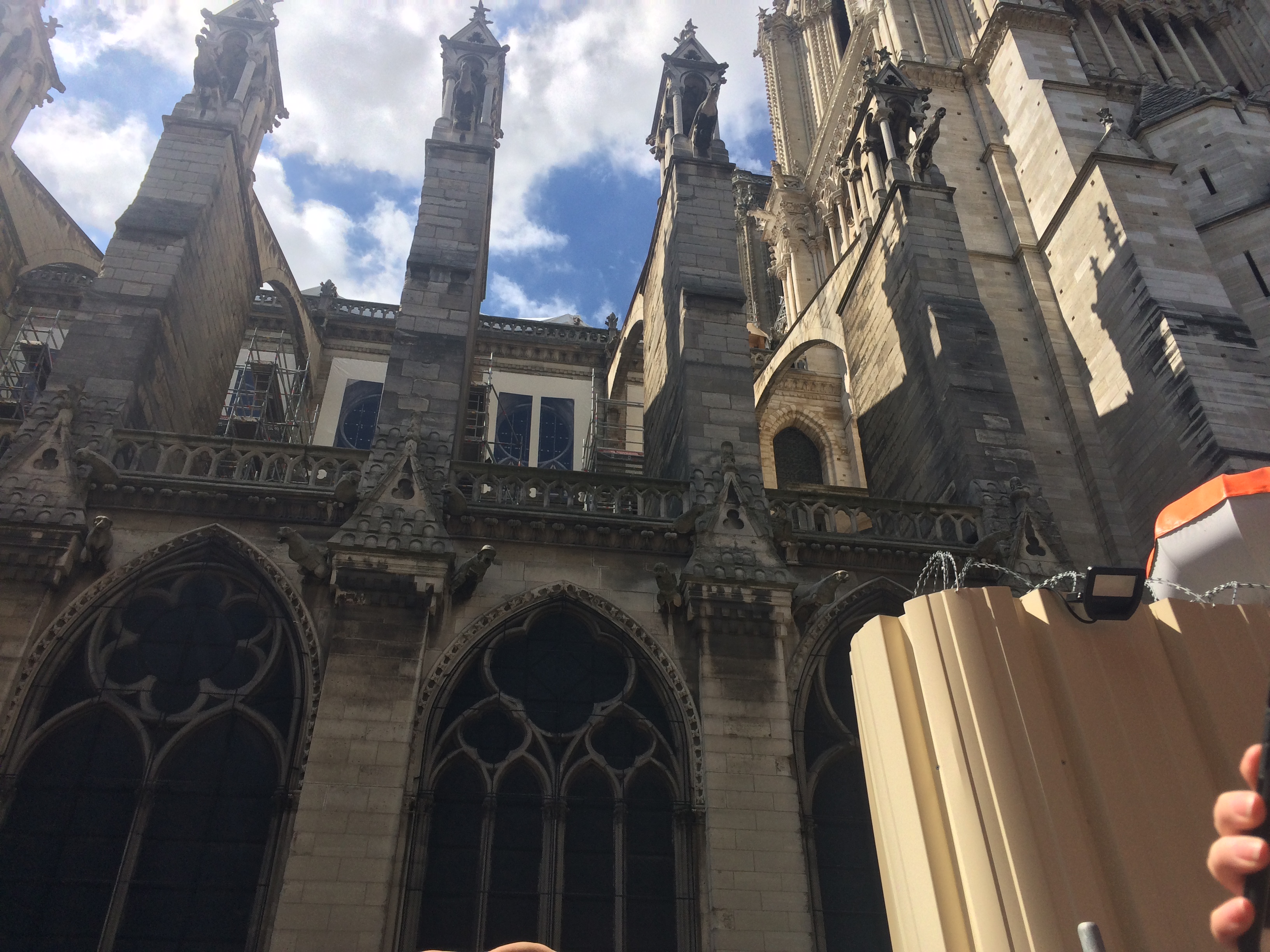
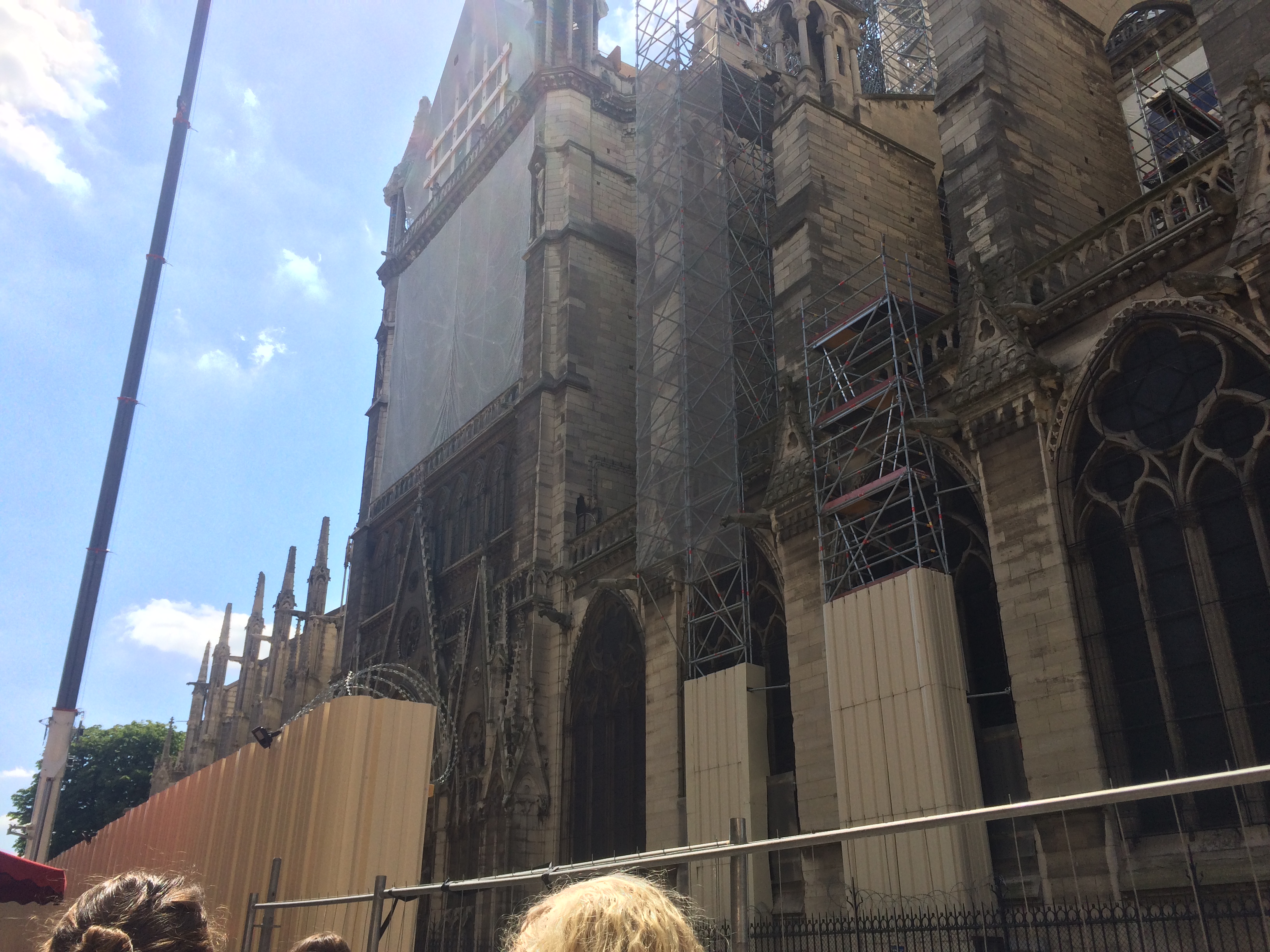

As I mentioned, the Notre-Dame is one of the most visited churches in the world. WorldAtlas in March 2019 listed it as #13 most popular tourist attraction worldwide, above any other church and any other building in Paris. Certainly, despite it being damaged, many people were standing outside looking at it and even taking pictures with it.
Another church we went to, or more a chapel that no longer holds Mass, was Sainte-Chapelle.
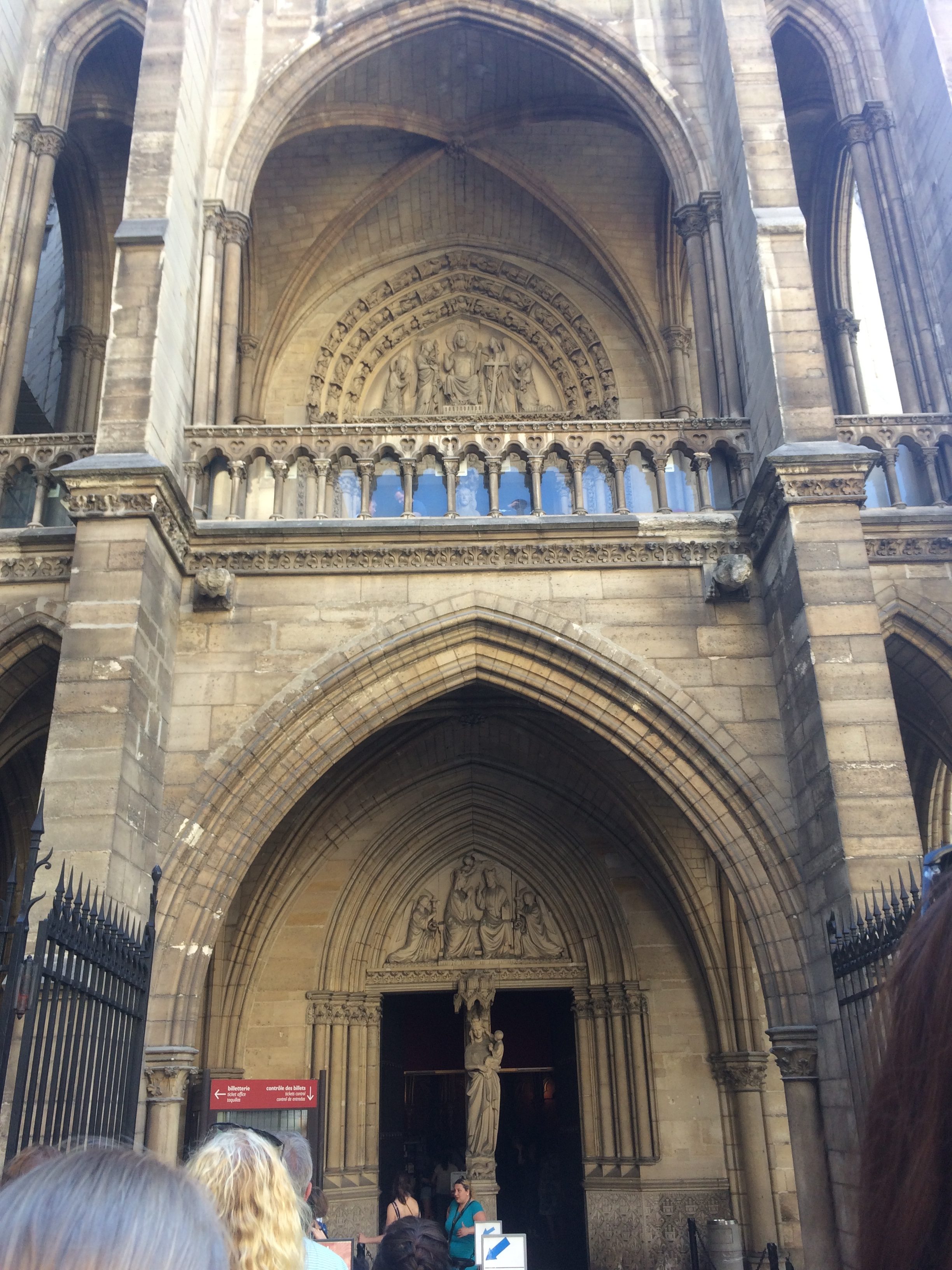
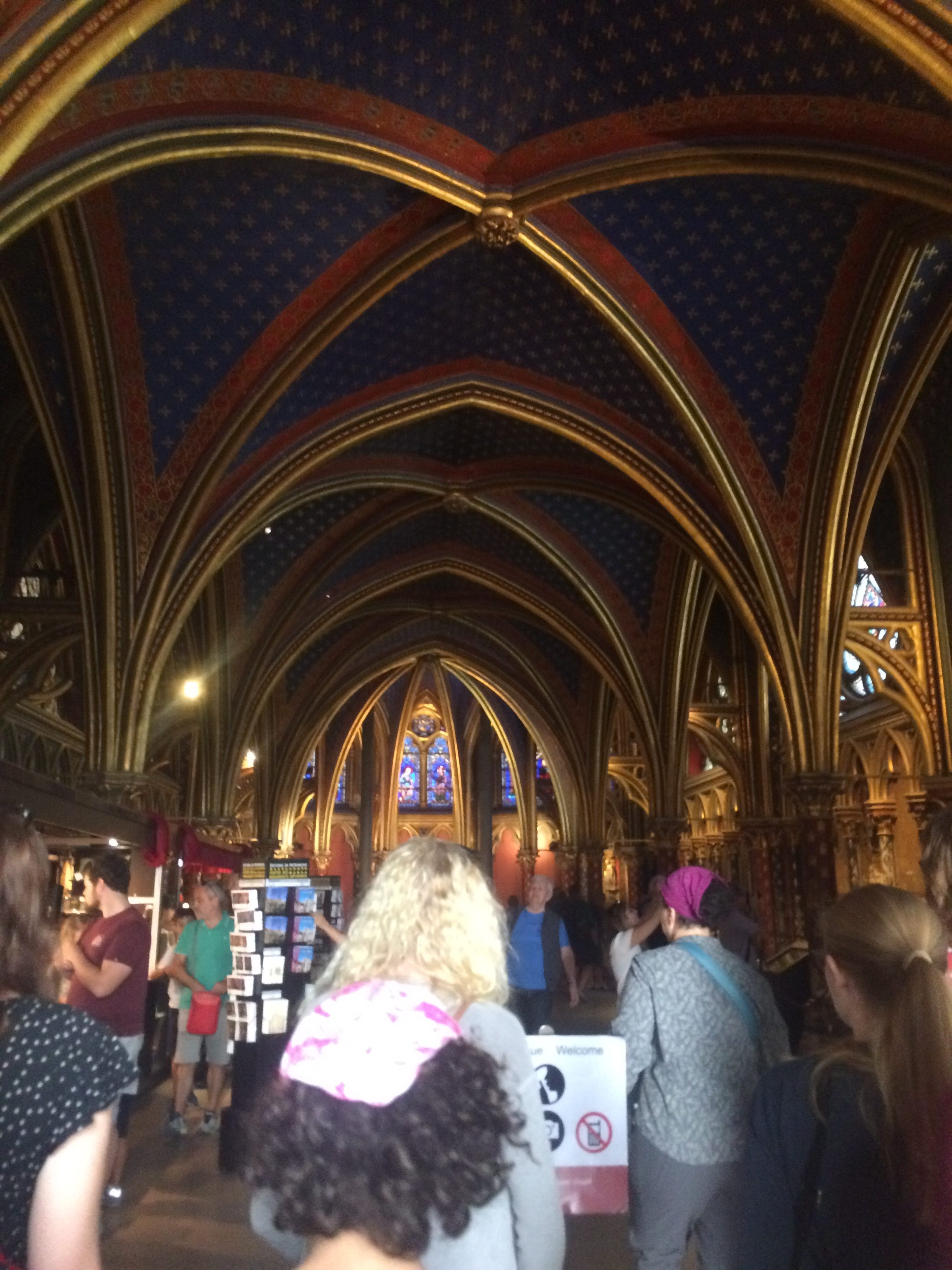


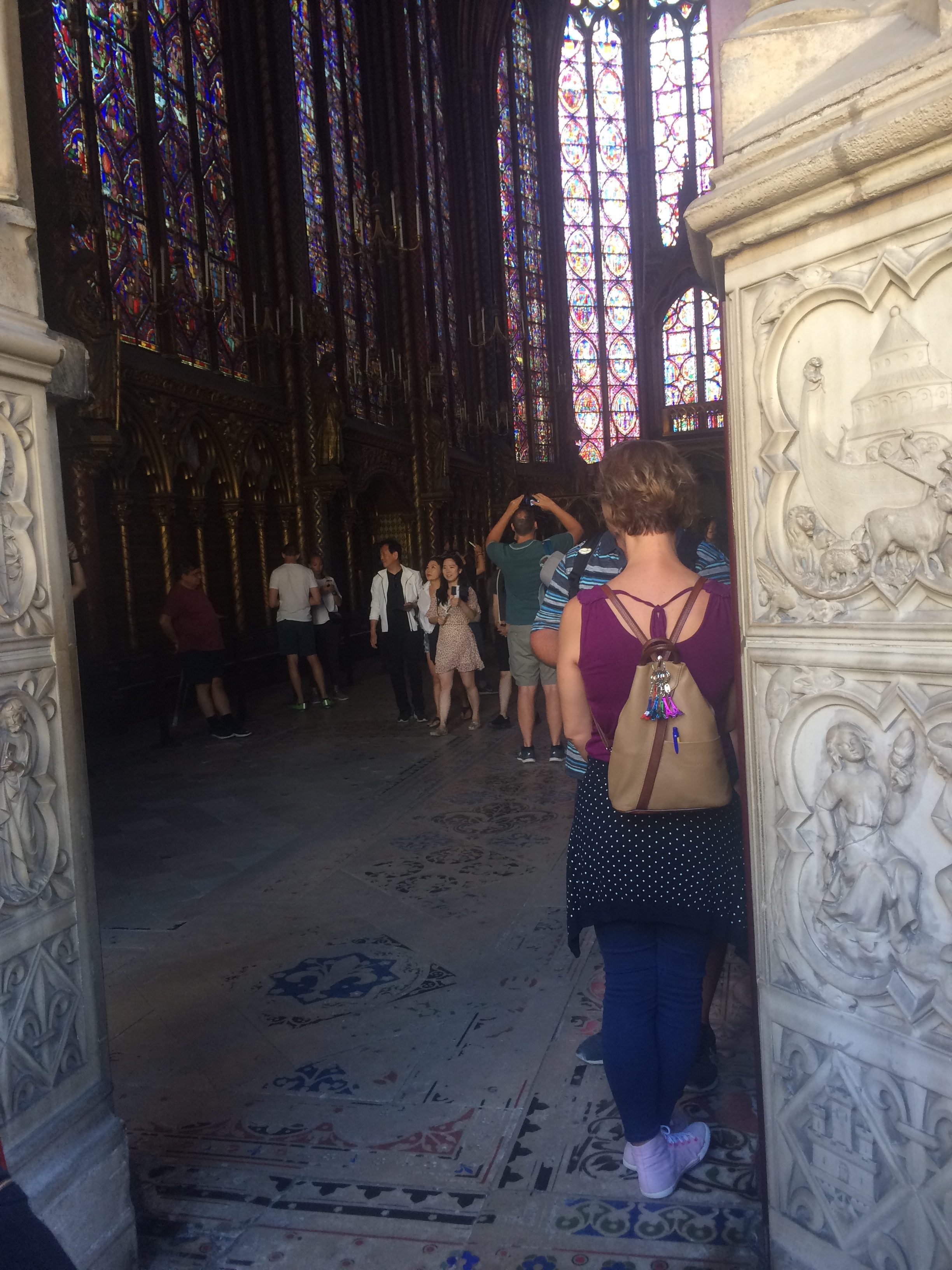
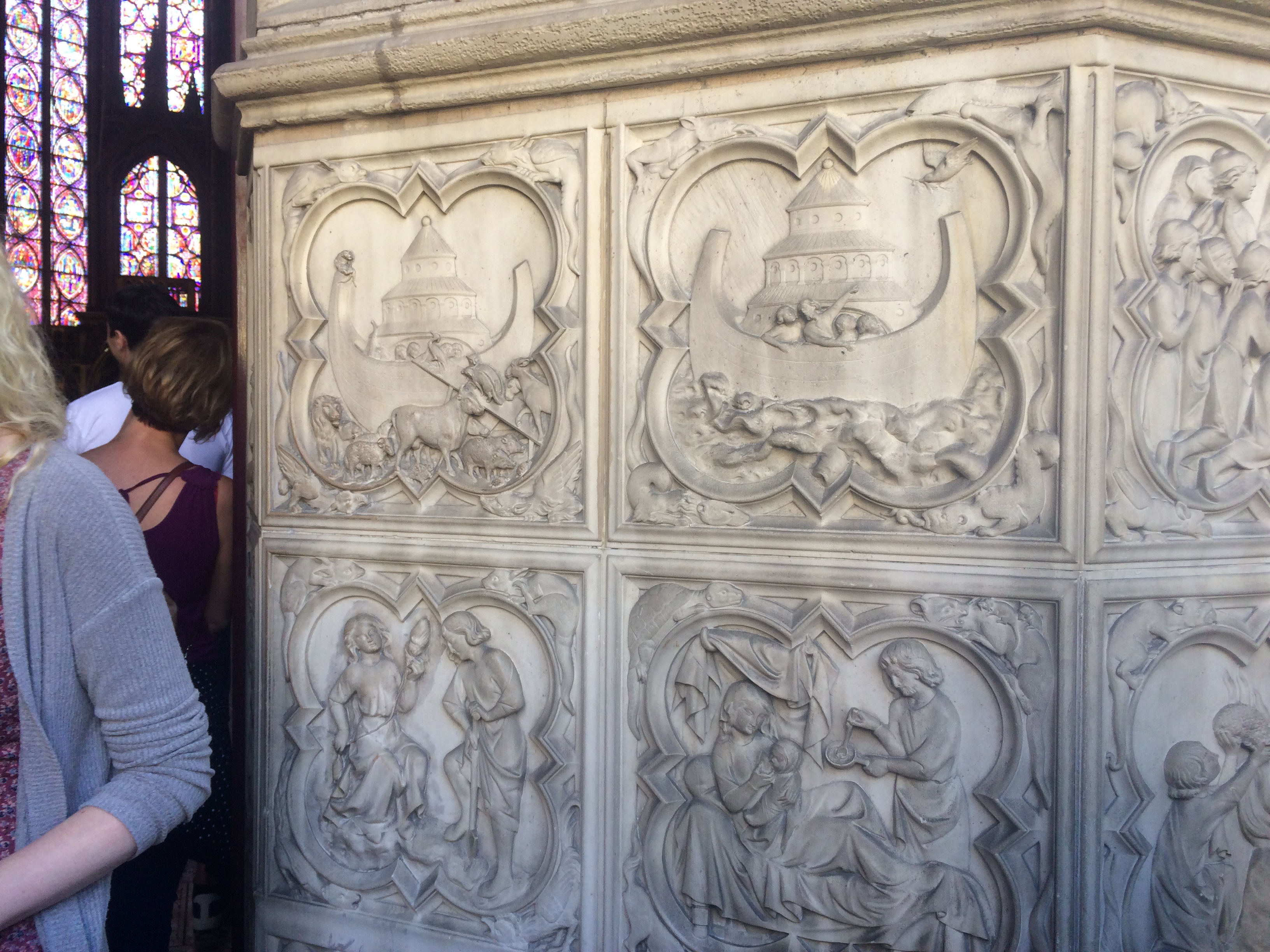
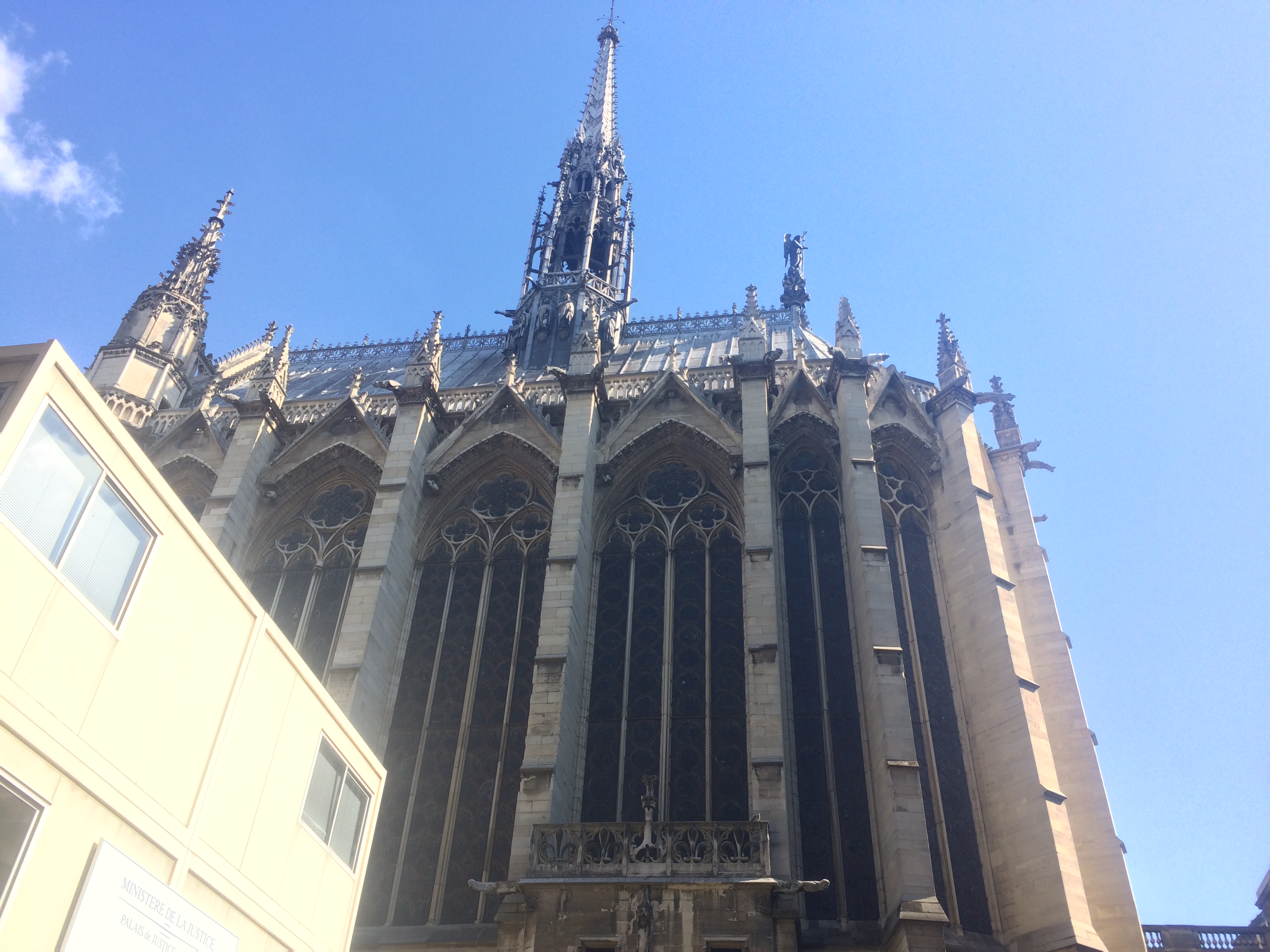
Oh, to be a royal! Out of all the places so far, it was the most grand, but perhaps not the most religious, despite being built as a chapel. Dr. Smith mentioned how the appearance was more for bragging than for religious devotion. In a way, religion seems to be left at the door a bit, with Jesus, Mary, and the biblical scenes at the entrance and exit to the chapel. The stained glass was absolutely gorgeous, though. I’d still go to Mass there!
After class ended, I saw two more churches with my group.
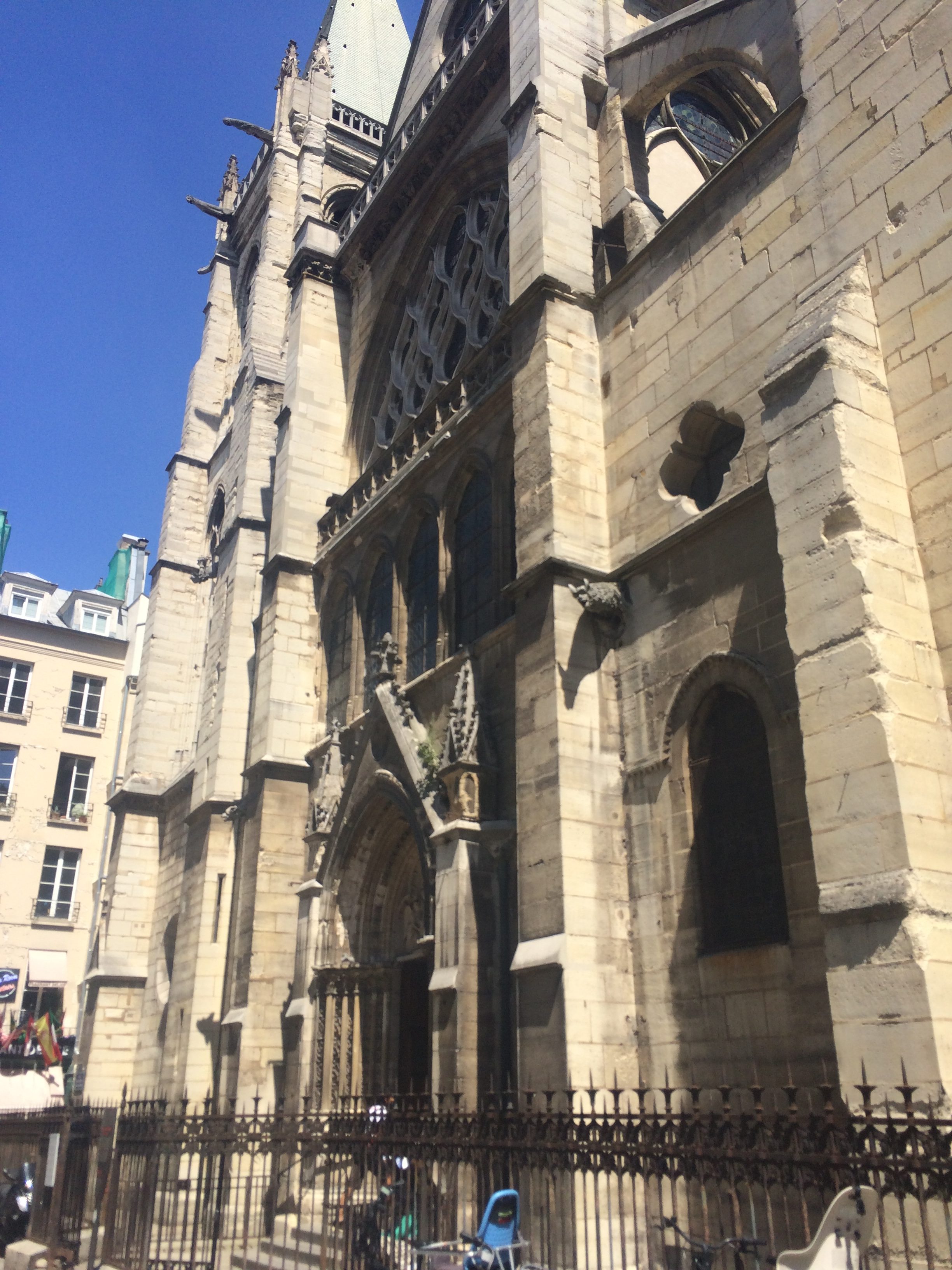
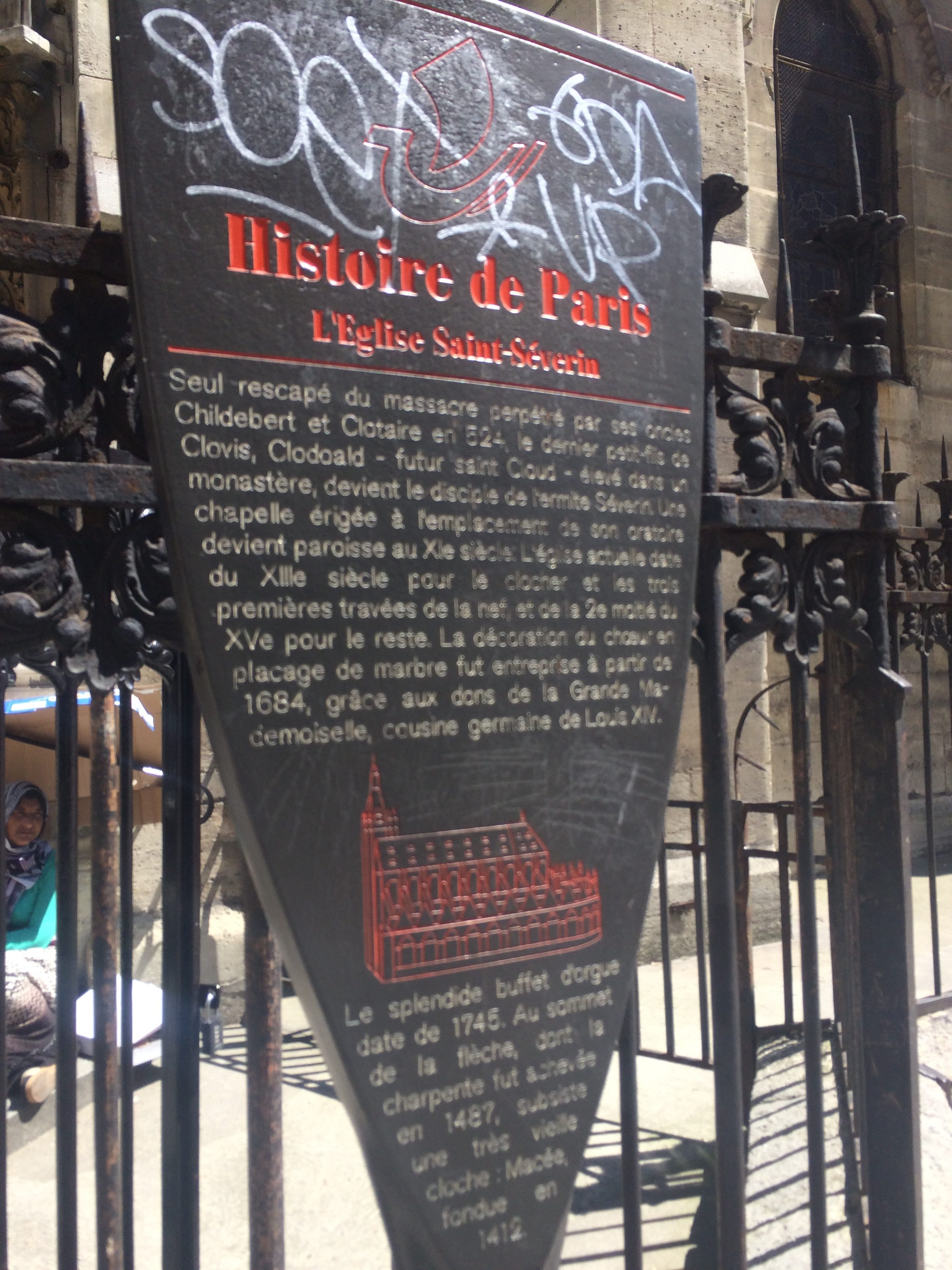
The first was the Church of Saint-Séverin at 3 Rue des Prêtres Saint-Séverin, 75005 Paris.
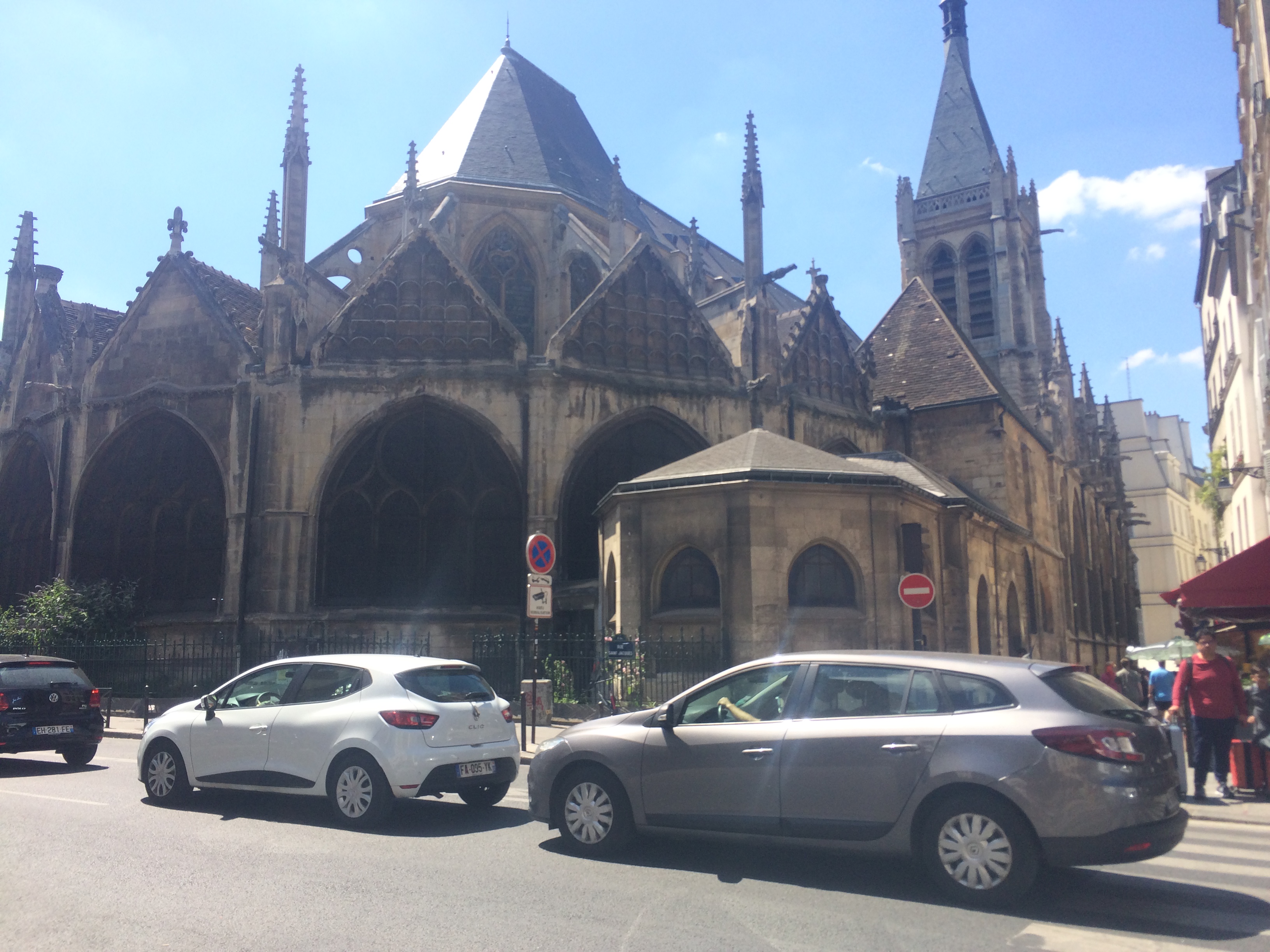

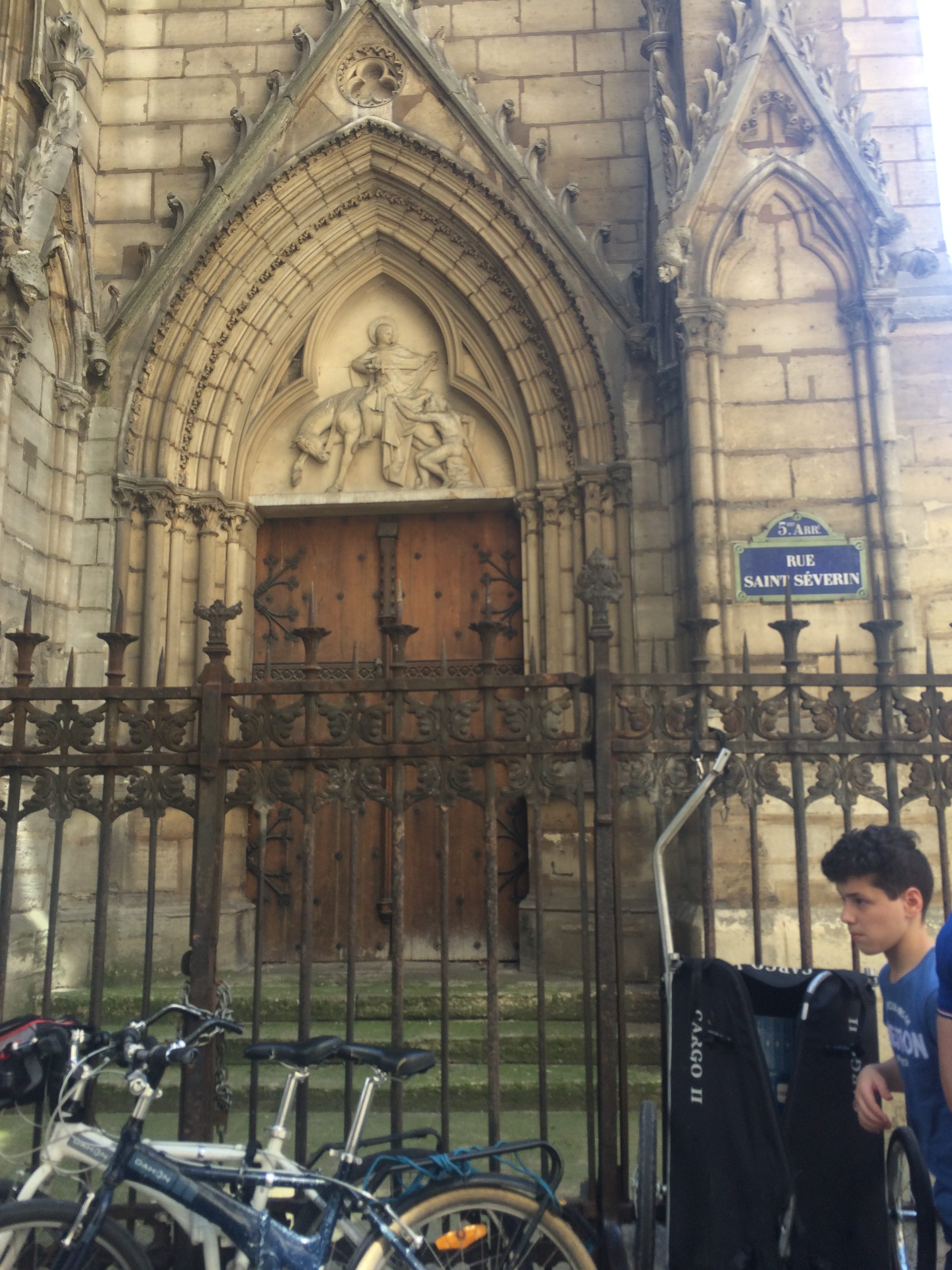
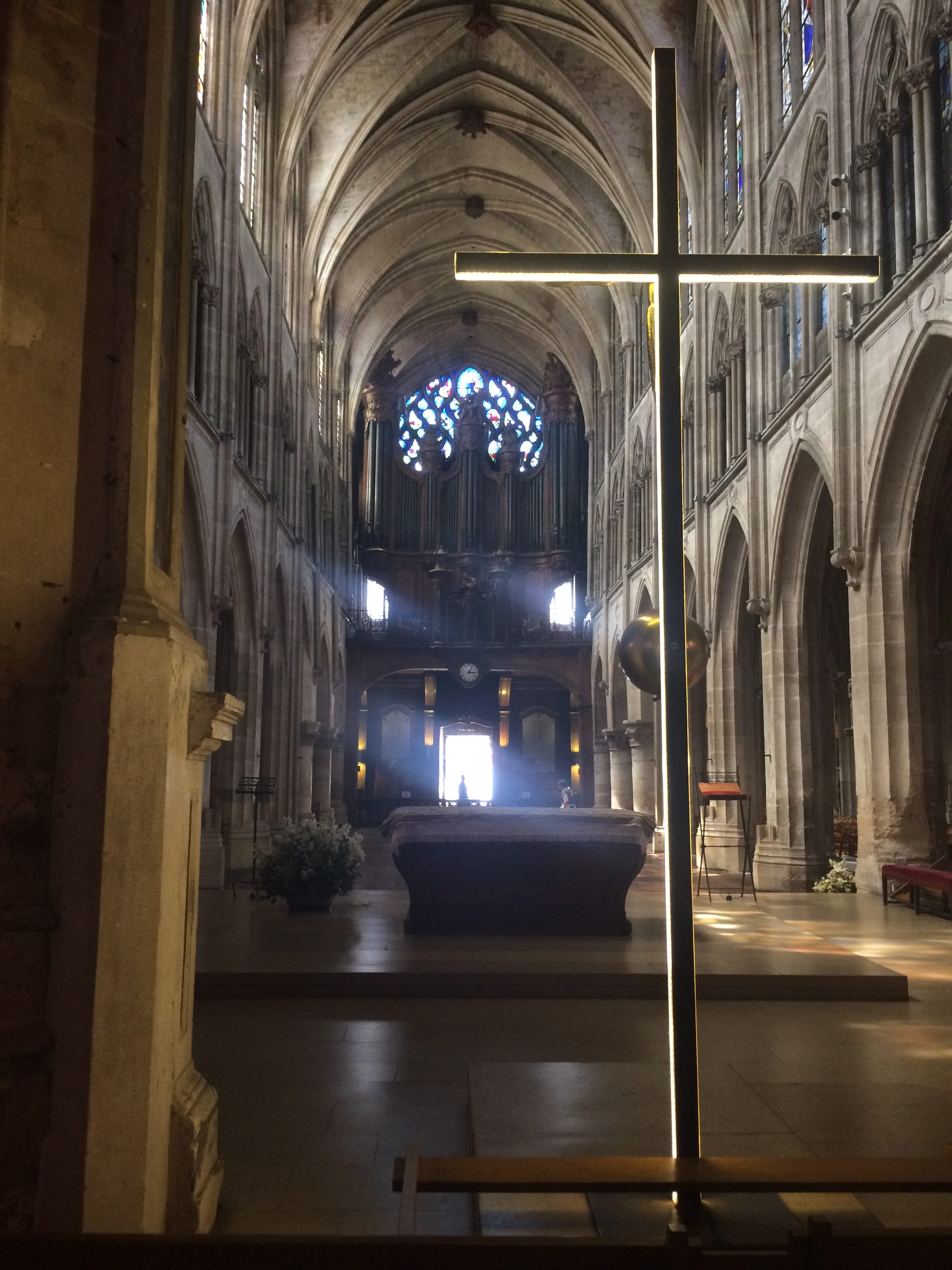
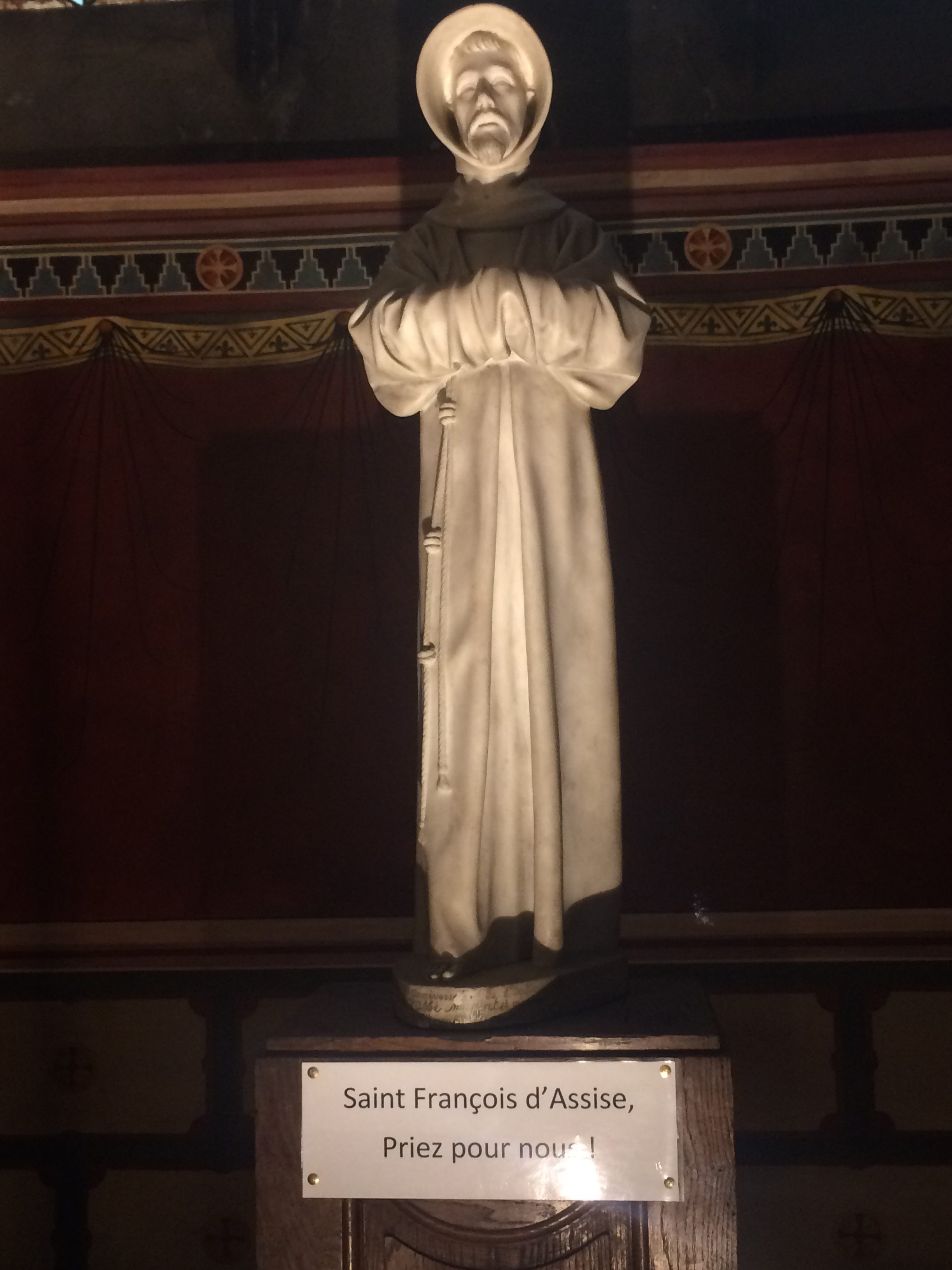
I was named after Saint Francis of Assisi, the patron saint of animals (among other things), so it was cool to see a statue of him. I noticed that he didn’t have candles lit, unlike many of the others. I wonder if he isn’t as popular as some of the other saints, who have more of a connection to the area.
According to its website, translated into English by Google Translate, the church was originally built in the 1200’s, built in a “classical Gothic” style. The church receives it’s 5 naves in the late 15th century, built in the “flamboyant Gothic style,” after it was rebuilt due to damage received in the Hundred Years’ War. Over the course of the next few centirues, up to present today, it continued to get additions-palm columns, chapels, an organ, and more stained glass windows. REstoration started in 1837, with some of these features added at the time, like side chapels.
Finally, the last church we saw was Saint-Julien-le-Pauvre, very close to Saint-Séverin at 79 Rue Galande, 75005 Paris. Unfortunately, my phone’s storage was full, so this is the only picture I have of it, though we did go inside.

Here’s a picture from the internet, so you all can see what the inside looks like
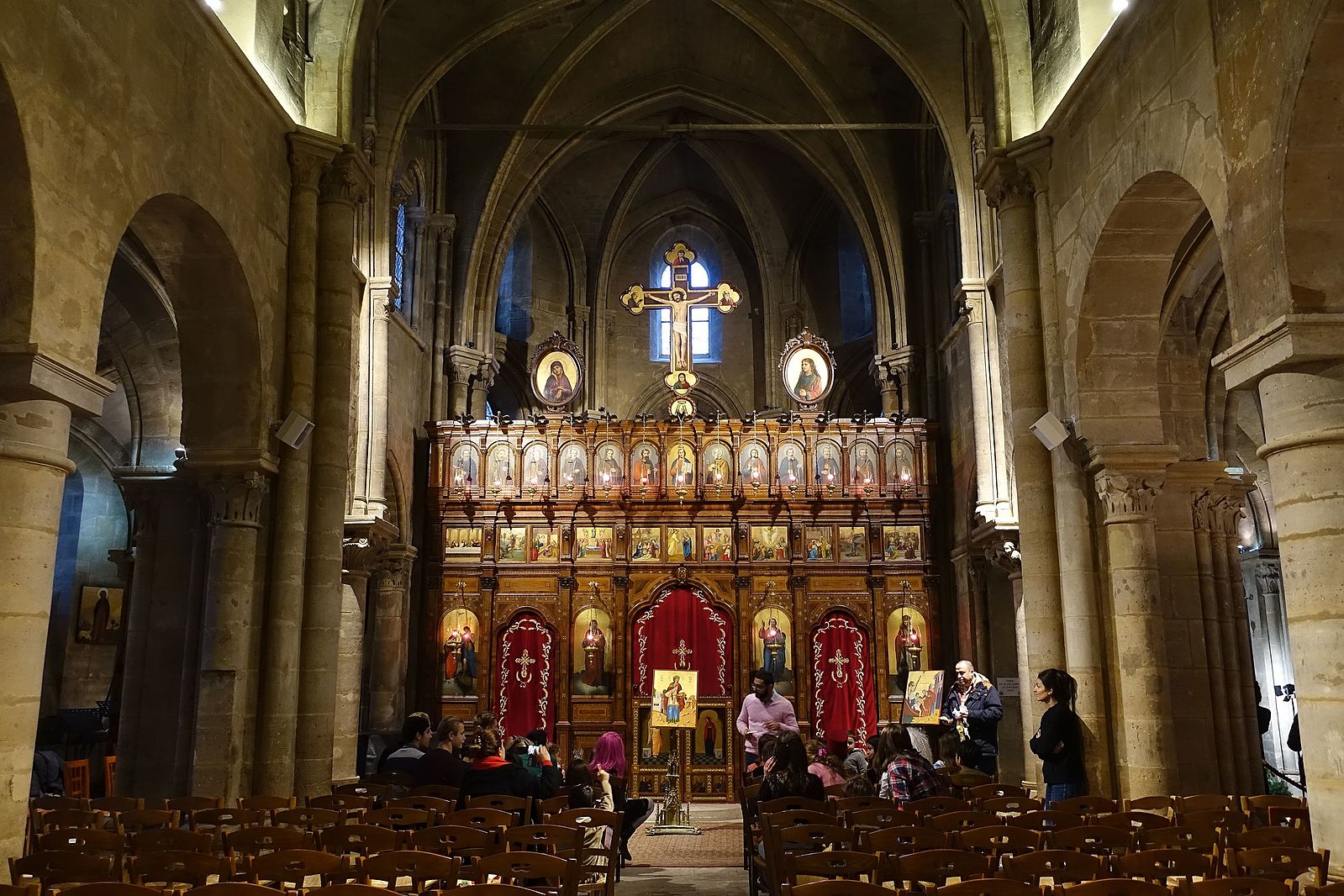
What’s really interesting about this church is that it’s of the Melkite Greek rite. I’ve never gone to a church that was not Roman Rite or even, before this trip, seen a non-Roman Rite Catholic church. The Melkite Greek Catholic Church is an Eastern Catholic Church that is in full communion with the Holy See. However, most of the Catholic churches in the world, including Paris, are Latin rite. According to EWTN, a rite is “represents an ecclesiastical, or church, tradition about how the sacraments are to be celebrated.” NewAdvent/The Catholic Encyclopedia says that rites are “different expressions of the same fundamental truths” with the same “essential elements.” The web pages hyperlinked give a list of rites of the Catholic church and go more in-depth. According to this church’s website, during the 19th century, many of the immigrants to Paris from the Egypt and the Ottoman Empire in the 19th century were Greek Catholics, who obtained permission on July 13th, 1886 to open a place for their rite to worship. Then, in 1888, they were allowed to rent the church of Saint-Julien-le-Pauvre, though it had to be restored, and was inaugurated on Sunday, May 5, 1889.
When comparing the two churches that I was able to go inside (Saint-Séverin and Saint-Julien-le-Pauvre), they are certainly very different. First of all, Saint-Séverin is significantly bigger. Though both have a nave and an aisle on either side, Saint-Séverin has two outer aisles as well, with chapels dedicated to saints, such as Saint Francis of Assisi, connected to those. Saint-Julien has two chapels as well, but smaller and shallower. While Saint-Julien does have some stained glass, it is nothing compared to Saint-Séverin.
Yet, interestingly, both call themselves Gothic churches. I’ve taken Art History 114 at UMW, and to me, Saint-Julien looks more Romanesque, with its regular buttress, rounded arches, and very solid appearance. Whereas, Saint-Séverin has the Gothic flying buttresses, stained glass windows, and pointed doors and arches. On the outside of Saint-Julien, there were posters calling it “the oldest church in Paris.” While I’m not sure how accurate that is, considering the website says that is was built “at the same time as the Notre-Dame cathedral of Paris,” the difference in age could explain the difference in appearance. Architecture was still transitioning away from Romanesque into Gothic when this church was being built, while Saint-Séverin was built later, solidly in the Gothic era.
Chocolates
Compared to the other two categories, there was less chocolate these two days
July 1st
I had M&M’s from the Airport
July 2nd
At lunch, after my cheese crepe, I got a chocolate crepe. It was really, really good! The chocolate was rich and not too sweet.

After lunch, we got ice cream at Berthillon (I believe that was the name of the place), I got a scoop of mocha, which probably was coffee and chocolate (though I only tasted the coffee, and a scoop of chocolate. Again, it was good chocolate. It wasn’t the typical ice cream that you get in the US-soft serve or hard (?) ice cream. It was more like sorbet.
Cheeses
July 1st
I’m not sure if this counts, but I had a little piece of Emmental cheese given as part of the dinner on the plane. I think I was technically given and eating the dinner when it was July 1st in France. I also had a bag of cheddar Goldfish from the Airport on the plane.
When we went to dinner after the boat tour, I had a salad with full slices of hard cheese. I’m not entirely sure what cheese it was (probably Parmesan, since it was a salad). I didn’t take any pictures of the salad-I was too hungry!
July 2nd
July 2nd was a very cheesy day.
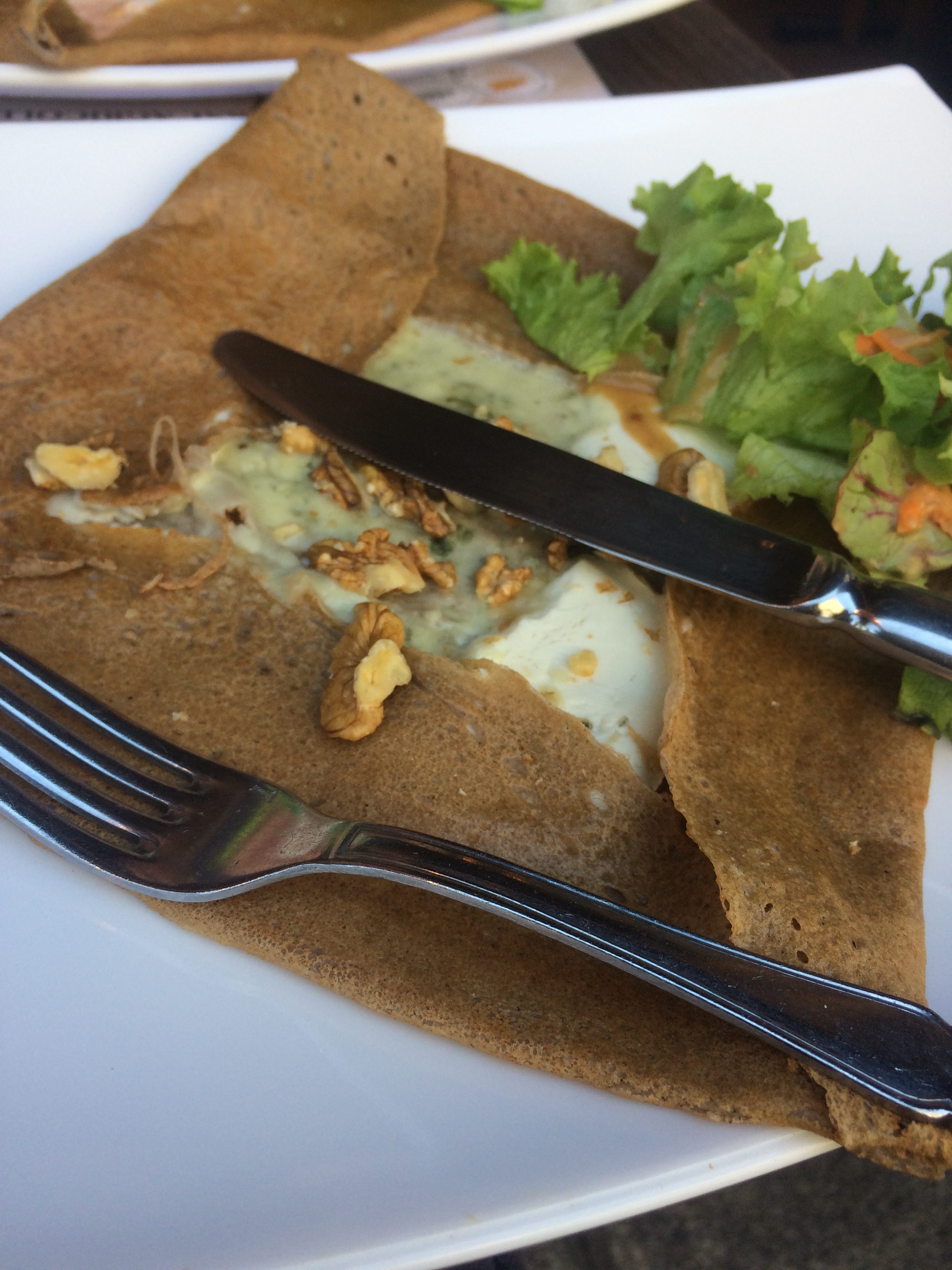
First, for lunch, we went to a restaurant and I got a buckwheat crepe with chevre (goat cheese), Roquefort (blue cheese) and nuts. It was very good! The cheese was very strong, which I loved, but might not be for everyone!
There was also the MICEFA picnic at Luxembourg Gardens, where it was a wine and cheese tasting. I liked all of the 6 cheeses. However, my favorite was the chevre, which doesn’t surprise me. It’s one of my favorite cheeses, if not my favorite. My second favorite at the picnic was the blue cheese. I also love blue cheese. I basically had the same two cheeses at lunch and dinner! This blue cheese wasn’t as strong as I’d like though. Unfortunately, I don’t have an pictures of this event-my phone ran out of storage. I need to figure out the storage situation ASAP.
It seems like so far, chevre and blue cheese seem to be very common cheeses in France, which makes sense, since they’re French cheeses. I haven’t seen much of the typical American cheeses, Cheddar and American. According to the Today Show, Cheddar, Mozzarella, and American are the most common types of cheese in the US. I’ll be keeping on eye out to see, when/how often these less Frenchy cheeses pop up, and where.
For more churches, chocolate, and cheese, check back in soon!
Bibliography
Colin B. Donovan, STL. 2007. CATHOLIC RITES AND CHURCHES. August 22. Accessed July 4, 2019. https://www.ewtn.com/expert/answers/catholic_rites_and_churches.htm.
Griffin, Patrick. “Rites.” The Catholic Encyclopedia. Vol. 13. New York: Robert Appleton Company, 1912. 4 Jul. 2019 <http://www.newadvent.org/cathen/13064b.htm>.
n.d. Histoires les Melkites. Accessed July 4, 2019. https://www.sjlpmelkites.com/histoire.
Patrick. n.d. https://saint-severin.com/la-construction-de-leglise/. Accessed July 4, 2019. https://saint-severin.com/la-construction-de-leglise/.
Stokstad, Marilyn, and Michael W. Cothren. 2014. Art History. 5th edition. Vol. 1. Upper Saddle River, New Jersey: Pearson Education, Inc.
Vellut, Guilhem. 2016. “Eglise Saint-Julien-le-Pauvre @ Paris.” Paris: Flickr, December 10. https://www.flickr.com/photos/o_0/30767174423/.
Wida, Erica Chayes. 2018. What’s America’s favorite cheese? It’s actually not American. June 4. Accessed July 4, 2019. https://www.today.com/food/these-are-america-s-favorite-cheeses-t130147.
About The Author

